The Elohim in Genesis are a plurality and this is what it literally says- also "We" and "They" are used.
Honorific? - I don't think so - there are no Jehovahim or Adonais. Nowhere in the Bible is a plural used as an honorific. Jesus didn't refer to His "Fathers". Queen Victoria said things like "We are not amused.", but we never refer to the Queen as "Queens". When God speaks from the burning bush He says "I Am that I Am", that is specific.
 |
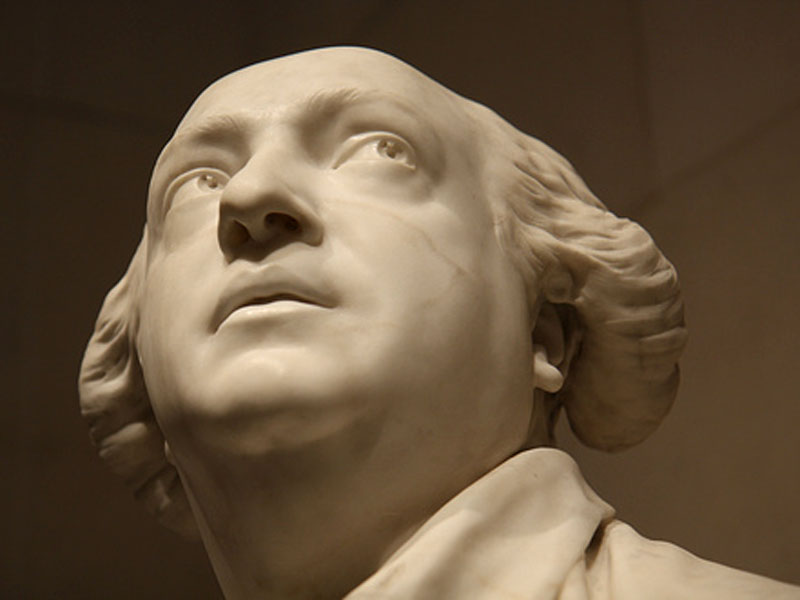
| Gerard Wagner |
|
All other lesser beings stream from Father God. Rudolf Steiner, along with the other Christian esotericists, sees in the Elohim the working of Christ the Creative Word.
The "gods many, and lords many" "including Thrones, angelic Lords, celestial Powers and Rulers;" that Paul of Tarsus speaks of, are the hierarchical beings. Paul's disciple Dionysius the Areopagite, Bishop of Athens, carried on this secret teaching and his later disciple, who took on his name, wrote of these Celestial Hierarchies. This book became, probably, the most influential in all Christendom. It was presented to Charlemagne as a coronation gift.
So revelation continues on.The Anthroposophical Christology is there for those who are ready for the "strong meat" as the writer of Hebrews tells it:
For when for the time ye ought to be teachers, ye have need that one teach you again which be the first principles of the oracles of God; and are become such as have need of milk, and not of strong meat. For every one that useth milk is unskilful in the word of righteousness: for he is a babe. But strong meat belongeth to them that are of full age, even those who by reason of use have their senses exercised to discern both good and evil.
-Hebrews 5:13-14
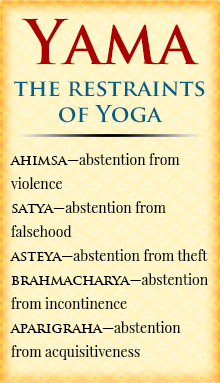
Rudolf Steiner gives the broader definition of stealing in his summing up of the Indian concept of Yama:
"Yama
includes everything which has to be given up by one who wishes to go
through a yoga training, and its precepts we find more fully expressed
in the commandments: Non-lying, non-killing, non-stealing,
non-extravagance, and non-desiring. The commandment 'non-killing' is a
very strict one, and holds good for all beings. No living being may be
killed, or even injured, and the more strictly this is kept, the further
the student is brought. It is beside the question to ask if this can be
carried out in our civilization.
'Non-lying' is easier to understand when it is kept in mind that every lie is a murder on the astral plane.
'Non-stealing':
That must also be carried out in its strictest sense. A European may
say he is not stealing, but in the eyes of the oriental yogi the matter
is not so lightly disposed of. In the countries where these precepts
were first divulged by the great teachers of humanity, the conditions of
life were much simpler, and the principle of theft could easily be
fixed. But a yoga teacher would not agree that a European does not
steal. If, for example, I appropriate in an unlawful way the working
power of another person, if I procure a profit for myself, a profit that
is permitted by law but that means the exploitation of another person,
the yoga teacher will call that 'stealing.' Our ways of life are
complicated. Many transgress this commandment without being in any way
aware of having done so.
'Non-extravagance'
is just as complicated. A person whose money is invested in
distilleries without his knowing it, is just as much guilty as the
manufacturer who distils liquors. The fact of not knowing does not
change the Karma. But if you are rich your possibility of hurting others
is lessened in the proportion in which you strive after frugality.
'Non-desiring'
is very difficult. It implies striving to be without any wants
whatever; approaching the world without a single desire, and merely
doing what is demanded of us by the outer world. Even the feeling of
satisfaction in bestowing benefits must be suppressed. In the yoga
teachings Yama is enforced with the utmost severity, and cannot, as it
is now taught, be transplanted to Europe."

It is interesting that Pantanjali makes the following distinction between wealth and theft:
"When abstinence from theft, in mind and act, is complete in the Yogee, he has the power to obtain all material wealth."
But that interpretation is by the theosophist, William Quan Judge, and it doesn't make a lot of sense since why would the yogi want "all material wealth".
A better version is by Charles Johnston: The Yoga Sutras of Patanjali:
"The obvious meaning is, that he who has wholly ceased from theft, in act, thought and wish, finds buried treasures in his path, treasures of jewels and gold and pearls. The deeper truth is, that he who in every least thing is wholly honest with the spirit of Life, finds Life supporting him in all things, and gains admittance to the treasure house of Life, the spiritual universe.
"37. Where cessation from theft is perfected, all treasures present themselves to him who possesses it."
The argument for Luke's genealogy being that of Mary is very weak.
According to Luke 3:23:
And when he began his ministry, Jesus himself was about thirty years of age, being supposedly the son of Joseph, the son of Eli, the son of Matthat, the son of Levi......
Aside from the fact that Mary is not mentioned, there are two possible interpretations: either Joseph was her father or he was her brother. Clearly this is not acceptable. A third would be that Joseph, the son of Eli, was her father and just happened to have the name as the man to whom she was betrothed. But that would seem to be grasping at straws.
The most straightforward interpretation is that Luke had no intention of tracing Mary's genealogy (in which case he would have named her) but that he traces her husband's, from David's son Nathan.
The Matthew descendant list most definitely traces down from David's son, Solomon, to Joseph. Matthew 1:16 reads:
And to Jacob was born Joseph, the husband of Mary, by whom was born Jesus, who is called Christ.
There are two apparent problems. The first is, how to reconcile the two paternal genealogies - which diverge with the sons of David, Solomon and Nathan. The second is, why is any genealogy of Joseph relevant at all, if Joseph had nothing to do with it. If Joseph was not Jesus's physical father, Jesus's messianic heritage is not based on truth but only on appearances, whatever Jesus's divine nature was.
The second problem is easy, in my mind. We assume that Joseph was not involved in the conception of Jesus in any way. However, a Holy Spirit capable of working a physical conception in Mary is also capable of employing the physical agency of Joseph's seed in this work.
In our materialistic times we interpret virginity and its loss solely in terms of a physical act, whereas it is really a matter of purity on a much higher level as well. The important thing is that neither Mary nor Joseph was conscious of any union between them (they had not "known" each other). Thus the first gospel's dedication of half its opening chapter to the genealogy of Joseph is quite relevant to Jesus, the Virgin birth notwithstanding.
There is an answer that creates, to begin with, more problems than it resolves. It is that the two evangelists are relating the births of two entirely different children of two entirely different sets of parents. Except for the names of the parents and the child, and the birthplace in Bethlehem, there is no point in common between the two stories. Matthew and Luke converge in their accounts only thirty years later with the Baptism of Jesus in Jordan.
Rudolf Steiner offered his explanation of how these accounts begin with two children and then converge with their accounts of the one Jesus of Nazareth. He did not derive his resolution from biblical study or speculation, or from other external documents. In any case, the details are described in Steiner's "The Spiritual Guidance of the Human Being and of Humanity", "The Gospel of St. Luke", and "The Gospel of St. Matthew". Whether or not Rudolf Steiner's methods and explanation are accepted as valid, at least this interpretation resolves the apparent contradictions of the two genealogies while leaving the text intact. As for the passing of one's Jewishness through the mother, this was never an issue with Jesus. No one ever questioned his or Mary's Jewishness. The issue of the genealogies has to do with his paternal line of descent from David, the king.
- by Gerry Palo
The development of Humankind up to this point has been to enhance the separateness of the individuality, and selfishness is part of this. The mission of alcohol played its part too.
In ancient times we experienced our "I" most naturally in all that was around us- the spiritual world as well. The mystic sought to regain some of this consciousness - "I am this world". This was the old tribal consciousness which still persists in some of our Australian Aboriginals.
This sense of individuality has left us with a loneliness, which is very apparent today.
The development of this separate "I" will not end here, but in a voluntary co-operative society in the future- known as the Sixth Race, or Philadelphia in Revelations. (The Sixth Sub Race will be the seed of the Sixth Root Race, or Epoch.)
"For selfless deeds are the real foundations of immortality: this is the reflex of selfless deeds in the outer world."
Another paradox- we only get to keep what we give away.
"To do something for the higher self is not selfish because it is not done only for the self. The higher self will be united with all other higher selves, so that is done for all at the same time."
"A tiny handful of men will save themselves and pass over to the Sixth Epoch. This tiny handful will have developed complete selflessness."
Compassion for self is a caring for oneself, it is not egotism. So many times today we hear of people hating themselves and sometimes led to suicide because of that hate. Compassion for self is right and correct, so is a strong I AM or ego-identity. Conceit is a different matter.
Vanity gives us a false view of ourselves in our relationship to the world.
Our true enduring self is our Higher Self. Our personality will perish at the end of this life.
*All quotes Rudolf Steiner
"In the same way that a higher animal excels a worm, do the Rishis, the Masters, excel humanity... What is highly esteemed in the West - knowing for the sake of knowing - is not what the adepts, the great Masters, of the East strive after. They aspire to knowledge which can help humanity, which can conduct it to the point where the destiny of humanity and the harmony of the world are in agreement with each other."
-Rudolf Steiner
Remember, the Masters are incarnate and speaking to mankind continually; it's just that most aren't listening.
“Today the Mahatmas will have something to say to us today....The three duties of the esoteric pupil are named: overcome pride and vanity, live theosophy practically, represent theosophy to the world.
"Now the Master Morya will speak....The Masters can be regarded by us as Ideal. They have attained what we must attain in the future. We can therefore question them about our future development. There lie within us, but as yet in the form of a germ, the forces which have reached perfection in a Master."
- Rudolf Steiner, Berlin, July 14, 1904, stenographic notes by Franz Seiler
"Morya - real name is communicated only to the more advanced pupils."
- Rudolf Steiner, The History and Contents of the Esoteric Section
"When in the world outside the modern leaders of men go about in human garb, they are unrecognized in the world. When from the standpoint of Spiritual Science we talk about 'The Masters of Wisdom and Harmony of Feelings' people would often be surprised to in what simple, unassuming human form these Masters are to be found in all countries. They are present on the physical plane."
- page 128, Wonders of the World, Ordeals of the Soul, Revelations of the Spirit, Rudolf Steiner.
"The Philosopher's Stone has a specific purpose, which was stated by Cagliostro; it is meant to prolong human life to a span of 5,527 years....In fact, however, it is possible, by means of special training, to prolong life indefinitely by learning to live outside the physical body."
"Physical death is only an apparent occurrence for him who has understood the Philosopher's Stone for himself, and has learnt to separate it."
"He lays aside the physical body in the same way that one takes of a raincoat, and he puts on a new body just as one puts a new raincoat on."
- Rudolf Steiner, pages 103-104 Temple Legend,
Dr. Steiner teaches that as we refine the astral body (establish peace) it "gradually approaches immortality", "an astral form arises which survives, remains living."
"When someone has become a Chela he begins to establish peace in the etheric body. Then the etheric body too survives. The Masters establish peace in the physical body; thus in their case the physical body also survives."
- Rudolf Steiner, Foundations of Esotericism, page 171
Let's make it clear to ourselves what's really brought about by meditation. Streams of spiritual life are always flowing through the world. These streams can't flow into us when we're thinking about everyday things. But our meditation words are like portals that are to lead us into the spiritual world. They have the strength to open up our soul so that the thoughts of our great leaders, the Masters of Wisdom and of the Harmony of Feelings can stream into us.
For this to happen the deepest quiet must reign in us. We must realize that meditation is a very intimate soul activity. So we should let the meditation words given to us by our teacher live in our soul right after we wake up and before other thoughts have gone through our soul.
But we shouldn't look upon them as stuff to speculate on and philosophize about; we should think as little as possible about their meaning and significance. We have enough time for reflection the rest of the day. We should hold that off completely while meditating. We shouldn't repeat the words meaninglessly but should be clear that the words open our soul to the instreaming of divine beings, just as a flower opens and lets in sunlight. High spiritual beings whom we call Masters stream down to us. We should realize that it's mainly they who guide us and are near to us in meditation.
We should also know that they walk on earth incarnated in a physical body. Thus we should let the meditation words live in our soul without pondering about them; rather we should try to grasp the words' spiritual content with our feelings and to permeate ourselves completely with it. The power of these words doesn't just lie in the thoughts, but also in their rhythm and sound.
-Rudolf Steiner, Esoteric Lesson