Translate

Sunday, November 04, 2007

"Cymatics" Video


THE original films of the Cymatics experiments made in the 1960's by Swiss scientist and anthroposophist, Dr. Hans Jenny.

"Hans Jenny (1904-1972), studied the phenomena and named the field `Cymatics'. Using crystal oscillators (which allow precise frequencies and amplitudes to be used), he vibrated various powders, pastes, and liquids, and succeeded in making visible the three-dimensional effects of sound. He produced an astonishing variety of awe-inspiring geometrical and harmonic shapes, including life-like flowing patterns, which he documented in photographs and films."

Plagiarised 'Rosicrucian Theosophy'

This is the most comprehensive research I have found on the matter: Heindel-Steiner Connection.

It was written by a member of the Rosicrucian Fellowship (Charles Weber). It seems to have got him into a lot of hot water too!


Dr. Steiner talks about a group in California stealing his teachings. Here is the quote from the Rudolf Steiner's Fifth Gospel:
"A man from America, who spent weeks and months getting to know our teachings, transcribed and carried them off in a watered-down form to America, where he has given out a plagiarized 'Rosicrucian Theosophy.'
True, he says he learnt a good deal from us over here, but that he was summoned to the Masters and learnt more from them. He says nothing, however, about having learnt from us the deeper things which he had drawn from the then unpublished lecture-courses."
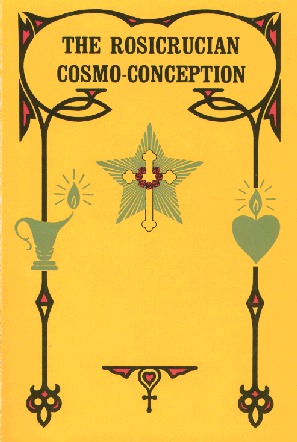
Count Carl Grashof (a Dane), a student of Dr. Steiner's, collected the typescripts of some his lectures before they had been published and took them to America. There he added some of his own touches and published the lot under the title of The Rosicrucian Cosmo Conception, using the pen name of "Max Heindel". The first edition of this work was dedicated to Rudolf Steiner.


So the Cosmo Conception has some of the elements of Steiner's teaching but it is not purely Steiner. There is a different teaching on the nature of Christ for instance, and it doesn't talk about Ahriman.
 

Dedication in First Edition of the Cosmo
Max Heindel was vice president of the Los Angeles Theosophical Society (later to become the Pasadena TS) during 1904 and 1905.


Tuesday, October 30, 2007

T.L.Harris & Swedenborg

Thomas Lake Harris
Thomas Harris studied Swedenborg - from a young age. In turn, Harris was the one-time teacher of Laurence Oliphant.

Oliphant appears in Dr. Steiner's Karmic Relationships lectures as a reincarnation of Ovid, and you'll find that Swedenborg is discussed just prior to this, as a reincarnation
Ignatius of Loyola.
 While incarnated as Ignatius of Loyola, he (Swedenborg) was under the influence of a "Mars Genius". As a balance to this it appears he was more under the inspiration of a Venusian influence during his stint as Swedenborg. Swedenborg, says Steiner, had a deeply intense love for knowledge, his clairvoyance however was not attained by means of exercises as recommended in Knowledge of the Higher Worlds.

Swedenborg attained his higher knowledge by means of what Steiner calls "erotic forces". Of course we don't have to take Steiner's word on this because Swedenborg tells us this himself:
 
Why Mrs. Blake Cried

The above article reveals how
also William Blake was a follower of Swedenborg.

"Also attending the Fetter Lane services was Emanuel Swedenborg, who periodically lived in London while working as a secret intelligence agent for the pro-French, pro-Jacobite party in Sweden (called the "Hats"). Since his student days, Swedenborg had access to rare instruction in heterodox Jewish mysticism, which included the more erotic and visionary theories of the Sabbatians, secret disiciples of the seventeenth-century "false messiah," Sabbatai Zevi. In his diaries, Swedenborg recorded many of the lurid sexual ceremonies of the Moravians, which initially attracted but later repelled him. Like Zinzendorf, Swedenborg sought out Jewish
Kabbalists in the East End, and he soon came under the spell of Dr. Samuel Jacob Falk, known as the "Baal Shem" of London (master of the magical names of God)."

Dr. Steiner spoke of the highly influential Sabbatai Zevi as a "False Christ".

From the above webpage:
"through the sublimation of his sexual energy into visionary energy. By meditating on the male and female potencies concealed in the vessels of Hebrew letters, by visualizing these letters in the forms of human bodies, by regulating the inhalation and exhalation of breath,"
Swedenborg progressed along the above lines.

Swedenborg:
"Journal of Dreams (1744-45)

...the will [male sephira] influences the understanding [female sephira] most in inspiration [breathing in]. The thoughts then fly out of the body inward, and in expiration are as it were driven out, or carried straight forth; showing that the very thoughts have their alternate play like the respiration... therefore when evil thoughts entered, the only thing to do was to draw to oneself the breath; so the evil thoughts vanished.

Hence one may also see the reason that during strong thought the lungs are held in equilibrium...and at this time the inspirations go quicker than the expirations... Also, of the fact that in ecstasy or trance, the man holds his breath "
Thomas Lake Harris was able to develop extraordinary abilities in respiration, so much so that a doctor declared that he had never encountered the like of before.
Swedenborg
An appreciation of D.N. Dunlop by W. J. Stein:


He also told me about Mr. Thomas Lake Harris, whom he met first in Ireland. He said: “Harris once met Laurence Oliphant in Piccadilly. Harris touched him on the shoulder and said ‘I want to change your life. Try to become the correspondent of The Times in Paris. Go to Paris, but one day a stone will be thrown through your window. Understand this as the sign that you must go immediately to California.’ All this happened. Oliphant found an excellent successor for his work for The Times and left, Paris.” All this Mr. Dunlop told me himself. Mr. Lake Harris was the head of a Spiritual Community, the Brotherhood of a New Life. In connection with this community there was a vegetarian restaurant in Dublin, where a special non-alcoholic wine was sold. Mr. Dunlop and his wife ran this restaurant for six months, but it came to an end when the cook had to leave. In this way Mr. Dunlop had a connection with Harris. After his return from America he had in his possession all the books by Harris, but up to that time he had not read them.

He felt that he should write to Madame Blavatsky, and he told her that he was in possession of all Harriss unpublished manuscripts, but had not started to read them. H. P. Blavatsky answered that he should send all these books back without reading them and after an important decision in which he had to choose between Harris and Blavatsky he decided in a way which was illustrated in a vision. Mr. Dunlop told the content of this vision to me, but I found a description of it written down by George Russell, his friend, under the title, “The Secret of Power” in the journal “The Path” which appeared as a publication of the Blavatsky Institute in Hale, Cheshire, and was edited by Dunlop and Lazenby. Mr. Dunlop told me that this vision appeared not only to him but also to his friend, George Russell, who was present in the same house in the moment of the vision. A.E. (George Russell) writes in Volume I of “The Path,” February, 1911:
“My friend was strangely disturbed, not only were his material affairs unsettled, but he was also passing through a crisis in his spiritual life. Two paths were open before him. On one side lay the dazzling mystery of passion; on the other ‘the small old path’ held out its secret and spiritual allurements. I had hoped that he would choose the latter, and as I was keenly interested in his decision, I invested the struggle going on in his mind with something of universal significance, seeing in it a symbol of the strife between ‘light and darkness which are the worlds eternal ways.’ He came in late one evening. I saw at once by the dim light that there was something strange in his manner. I spoke to him in enquiry; he answered me in a harsh dry voice, quite foreign to his usual manner: ‘Oh, I am not going to trouble myself any more. I will let things take their course.’ This seemed the one idea in his mind, the one thing he understood clearly was, that things were to take their own course; he failed to grasp the significance of any other idea or its relative importance. He answered: ‘Aye, indeed,’ with every appearance of interest and eagerness to some ‘trivial’ remark about the weather, and was quite unconcerned about another and most important matter which should have interested him deeply. I soon saw what had happened; his mind, in which forces so evenly balanced had fought so strenuously, had become, utterly wearied out and could work no longer. A flash of old intuition illuminated at last – it was not wise to strive with such bitterness over life – therefore he said to me in memory of this institution, ‘I am going to let things take their course.’ A larger tribunal would decide. He had appealed unto Caesar. I sent him up to his room and tried to quiet his fever by magnetization with some success. He fell asleep and as I was rather weary myself I retired soon after.

This was the vision of the night. It was surely in the room. I was lying on my bed and yet space opened on every side with pale, clear light. A slight wavering figure caught my eye, a figure that swayed to and fro; I was struck with its utter feebleness, yet I understood it was its own will or some quality of its nature which determined that palpitating movement towards the poles between which it swung. What were they? I became silent as night and thought no more. Two figures awful in their power opposed each other; the frail being wavering between them could, by putting out its arms, have touched them both. I alone wavered, for they were silent, resolute and knit in the conflict of will; they stirred not a hand nor a foot; there was only a still quivering now and then as of intense effort, but they made no other movement. Their heads were bent forward slightly, their arms folded, their bodies straight, rigid and inclined slightly backwards from each other like two spokes of a gigantic wheel. What were they, these figures? I knew not and yet gazing upon them, thought which took no words to clothe itself mutely read their meaning. Here were the culminations of the human, towering images of the good and evil men may aspire to. I looked at the face of the evil adept. His bright red-brown eyes burned with a strange radiance of power; I felt an answering emotion of pride, of personal intoxication, of physic richness rise up within me gazing upon him. His face was archetypal; the abstract passion which eluded me in the features of many people, I knew was here declared, exultant, defiant, gigantesque; it seemed to leap like fire, to be free. In this face I was close to the legendary past, to the hopeless worlds where men were martyred by stony Kings, where prayer was hopeless, where pity was none. I traced a resemblance to many of the great destroyers in history whose features have been preserved, Napoleon, Rameses, and a hundred others, named and nameless, the long line of those who were crowned and sceptred in cruelty. His strength was in human weakness. I saw this, for space and the hearts of men were bare before me. Out of space there flowed to him a stream, half invisible, of red; it nourished that rich radiant energy of passion. It flowed from men as they walked and brooded in loneliness, or as they tossed in sleep. I withdrew my gaze from this face which awoke in me a lurid sense of accompaniment, and turned it on the other.

An aura, pale soft blue was around this figure through which gleamed an underlight as of universal gold. The vision was already dim and departing, but I caught a glimpse of a face god-like in its calm, terrible in the beauty of a life we know only in dreams, with strength which is the end of the heros toil, which belongs to the many times martyred soul; yet not far away nor in the past was its power, it was the might of life which lives externally. I understood how easy it would have been for this one to have ended the conflict, to have gained a material victory by its power, but this would not have touched on or furthered its spiritual ends. Only its real being had force to attract that real being, which was shrouded in the wavering figure... This figure, wavering between the two, moved forward and touched with its hand the Son of Light. All at once the scene and actors vanished, and the eye that saw them was closed. I was alone with darkness and a hurricane of thoughts... For the rest the vision of that night was prophetic and the feet of my friend are now set on that way which was the innermost impulse of his soul.”

This is the story as given by George Russell. Mr. Dunlop described this vision to me and even many years afterwards, speaking about it, I could see how intensely alive both these figures had been. He described two beings, the red one in red clothing and red light: and the blue one in blue clothes and blue light, both very beautiful and impressive, and the voice sounded and asked him to choose between them, and he said, “I decided for the blue, and it was a great decision, as I felt. The red disappeared at first, and only afterwards the blue, and then an old wise man appeared and began to teach me.”


Saturday, October 27, 2007

Consciousness (or Spiritual) Soul


I am what I am firstly because I am the soul, not because of the faculty which does recognize such, without which I would still be and still are - in slumber, in wakefulness, I, my soul, endures.
The sense of I, id - individuality in relation to the worlds - becomes distinct because I have a soul; without which I should not come to know that I know, but should gravitate to and around that which I am most sympathetic to.

And it is to the ego that we attribute experience and also that which follows experience - and it is the egg-shaped ego which encloses the soul, with essences of: fiery activity (cognition), fiery ethers (form and the plans thereof), divine impulses (characterizing streams of being, planetary rays etc.), vitality fluids (of which there are many), memory (akashic recall), sympathy ('bonded to' influences, signature keys etc.), substance (particles of quality, that which is of elements known or to be known - e.g. copper and its corresponding planet etc.), metabolism (related to sympathy, access to Pneu of Man at present), Desire (subtle body which makes sense of sense, sensitive to fiery activity also), Greater Desire (sensitive to the impulse of greater cognition, motivation, and exclamation) and last but not least, Joy, Love, Laughter, Compassion and Happiness: which are natural to the soul and the ego, and characteristic to the expression of being, as being.
-B.Hive

What does living "in the consciousness soul" mean?
We could start by reading chapter one of Rudolf Steiner's, Theosophy part four - although that is very basic.


An aspect of the Consciousness (or Spiritual) soul, is the importance of individuals making free decisions, being "true to oneself".
Steiner was careful when giving advice to present facts and let people decide for themselves. This is a theme in Steiner's "Philosophy of Spiritual Activity", but really a theme for the whole of anthroposophy.

We are capable of making our own good decisions out of the Consciousness Soul, because through it we attain to the Eternal Spirit, the True and the Good - see "Theosophy". That gives us the power to make our own "moral imaginations".

This ability is a fairly new one bestowed upon Man, and still, as they used to say on a lot of websites, "under construction".


Another aspect is the direct spiritual intuitions a student may have, which are not just a result of intellectualizing or study. Here one must talk of Manas or Spirit Self as well as Consciousness Soul:


"The "I" lives in the soul. Although the highest manifestation of the "I" belongs to the Consciousness Soul, one must, nevertheless, say that this "I" raying out from it fills the whole soul, and through it exerts its action upon the body."


(Quotes from "Theosophy")
The highest expression of our holiest of holies, the 'I', is the Consciousness Soul- it could be called an "over-ego". (BTW my old copy of "Theosophy" refers to the Intellectual Soul as "Kama Manas".)


 Continuing:
"The spirit forming and living as "I" will be called spirit self because it manifests as the "I," or ego, or self of man. The difference between the spirit self and the consciousness soul can be made clear in the following way. The consciousness soul is in touch with the self-existent truth that is independent of all antipathy and sympathy. The spirit self bears within it the same truth, but taken up into and enclosed by the "I," individualized by it, and absorbed into the independent being of the individual. It is through the eternal truth becoming thus individualized and bound up into one being with the "I" that the "I" itself attains to the eternal."

"The spirit self is a revelation of the spiritual world within the "I", just as from the other side sensations are a revelation of the physical world within the "I". In what is red, green, light, dark, hard, soft, warm, cold one recognizes the revelations of the corporeal world. In what is true and good are to be found the revelations of the spiritual world. In the same sense in which the revelation of the corporeal world is called sensation, let the revelation of the spiritual be called intuition."
In order to understand anything of an esoteric character it is essential to be adept in both intellect and imagination. Reasoning alone, will not bring to life the spiritual realities in the soul. Not everyone is so gifted as to be able to imagine and reason well at the same time, but the numbers will grow in time.


Thinking & the Human Being

Folk pull apart the butterfly to see how it works. Divisions of the human being are made for the purposes of scientific study. There are always flaws in this approach to study, in that each part works in with the other as an organic whole.

When do we ever purely think, purely feel or purely will? It is always a matter of cooperation between faculties.

Viewing the human being as a lot of fragmented parts is fundamentally wrong to begin with- an unhealthy soul conception. We are (or should be) after all, a functioning whole.


Rudolf Steiner uses the word "thinking" in a specific way. What is spoken of colloquially as "thinking" is not thinking but a parade of ideas.

 
The statement by Dr. Steiner that animals don't think is considered controversial by some. Steiner did admit that animals deliberate. A wasp deliberates, or a beetle which really doesn't have much that you could call a brain, deliberates. The great wisdom that a beaver displays in constructing dams, lodges and canals to transport logs, is something that the beast "sucks in" from outside of itself- from the Cosmos according to Steiner. But still this must also require some deliberation by the animal itself.

The difference between the animal and the human being is that the human reasons in full waking consciousness.
The conditions of driving a manual car and "automatically" changing gears, or "automatically" touch typing as you read a text don't really come under the heading of "thinking". In fact if you become conscious of your fingers moving to each key one by one, you slow right down- so thinking about the process doesn't help. The human being is not stuck in one area of reasoned thought that goes around and around- like a beaver building dams season after season. Of course, some are stuck on this merry-go-round. 


There are other ways of knowing besides thinking. In fact human beings in the ancient past had an instinctual knowing that enabled them to build civilizations that rivaled our own in technological marvels.

In the realm of thinking we can become conscious
(that is why we have the capacity for freedom in thinking), in the feeling life we live in a dream and in willing we are in a deep sleep.