Translate

Thursday, November 14, 2013

Water, the Supporter of Life


Phillip Ball-

The more we get to know about the molecular machinery of the cell, the more we realise that it could not function in any liquid except water. No other liquid has a structure as subtle as that of water (even though some other compounds can form hydrogen bonds), and this structure seems to be essential for the kind of delicate chemistry that makes life possible. Even if alien organisms use molecules other than proteins and DNA, it's hard to see how they could avoid being comparably complex - and how, therefore, they could relinquish the need for an active, sympathetic solvent and mediator like water.

In the early twentieth century, an American biochemist named Lawrence Henderson argued that water seems so beautifully and uniquely suited for supporting life that it is hard not to perceive it as designed for this purpose. Henderson did not know about the fine details of how water gives a helping hand to the molecules of life (although he would have been quite delighted if he had). But he could see that the many 'anomalous' properties of water already known made it an incomparable 'matrix' for life. The large heat capacity, which helps the oceans maintain a steady temperature, does just the same thing for organisms (which are, remember, mostly water)- it is perfect for temperature regulation. Lawrence pointed out that another method of heat regulation is evaporation: when liquid water changes to water vapour, it imbibes a great deal of energy (more than other liquids). This provides a way to prevent overheating, and it is why we sweat. Lakes can stay at a constant temperature under intense sunlight for the same reason: as water evaporates from the surface, it is rather as if the lake is sweating.


Henderson collected together many other examples of the way water seems fine-tuned to support life. Its unusually large surface tension, for instance, means that water is pulled up through the empty pores and channels in soil by capillary action, making it accessible to plants growing at the surface even if the water table is several feet lower than the roots. Henderson believed that water was uniquely 'fit' in Darwin's sense: it was perfectly adapted to sustain life. Thus he believed that evolution of organisms - survival of the fittest, as the rather crude caricature of those times expressed it- takes place in a 'fit' environment. 'Water, of its very nature', he said, 'as it occurs automatically in the process of cosmic evolution, is fit, with a fitness no less marvelous and varied than that fitness of the organism which has been won by the process of adaptation in the course of organic evolution.' Henderson considered that carbon compounds are also remarkably and uniquely attuned to serve as the building blocks of life- that carbon in some sense makes life inevitable. 'The biologist', he concluded, 'may now rightly regard the universe in its very essence as biocentric.'


Fructify Thyself- Dr. Steiner


“Know thyself.”....the most dangerous thing in the realm of knowledge is to grasp these words erroneously and today this occurs only too frequently. Many people construe these words to mean that they should no longer look about the physical world, but should gaze into their own inner being and seek there for everything spiritual. This is a very mistaken understanding of the saying, for that is not at all what it means. 

 
We must clearly understand that true higher knowledge is also an evolution from one standpoint, which the human being has attained, to another which he had not reached previously. If a person practices self-knowledge only by brooding upon himself, he sees only what he already possesses. He thereby acquires nothing new, but only knowledge of his own lower self in the present meaning of the word. This inner nature is only one part that is necessary for knowledge. The other part that is necessary must be added. Without the two parts, there is no real knowledge. By means of his inner nature, he can develop organs through which he can gain knowledge. But just as the eye, as an external sense organ, would not perceive the sun by gazing into itself, but only by looking outward at the sun, so must the inner perceptive organs gaze outwardly, in other words, gaze into an external spiritual in order actually to perceive. 

The concept “Knowledge” had a much deeper, a more real meaning in those ages when spiritual things were better understood than at present. Read in the Bible the words, “Abraham knew his wife!” or this or that Patriarch “knew his wife.” One does not need to seek very far in order to understand that by this expression fructification is meant. When one considers the words, “Know thyself,” in the Greek, they do not mean that you stare into your own inner being, but that you fructify yourself with what streams into you from the spiritual world. “Know thyself” means: Fructify thyself with the content of the spiritual world!
 

-Lecture 12, Gospel of John, Rudolf Steiner

Seven by T.L.Harris

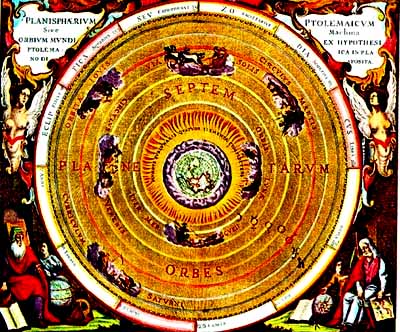
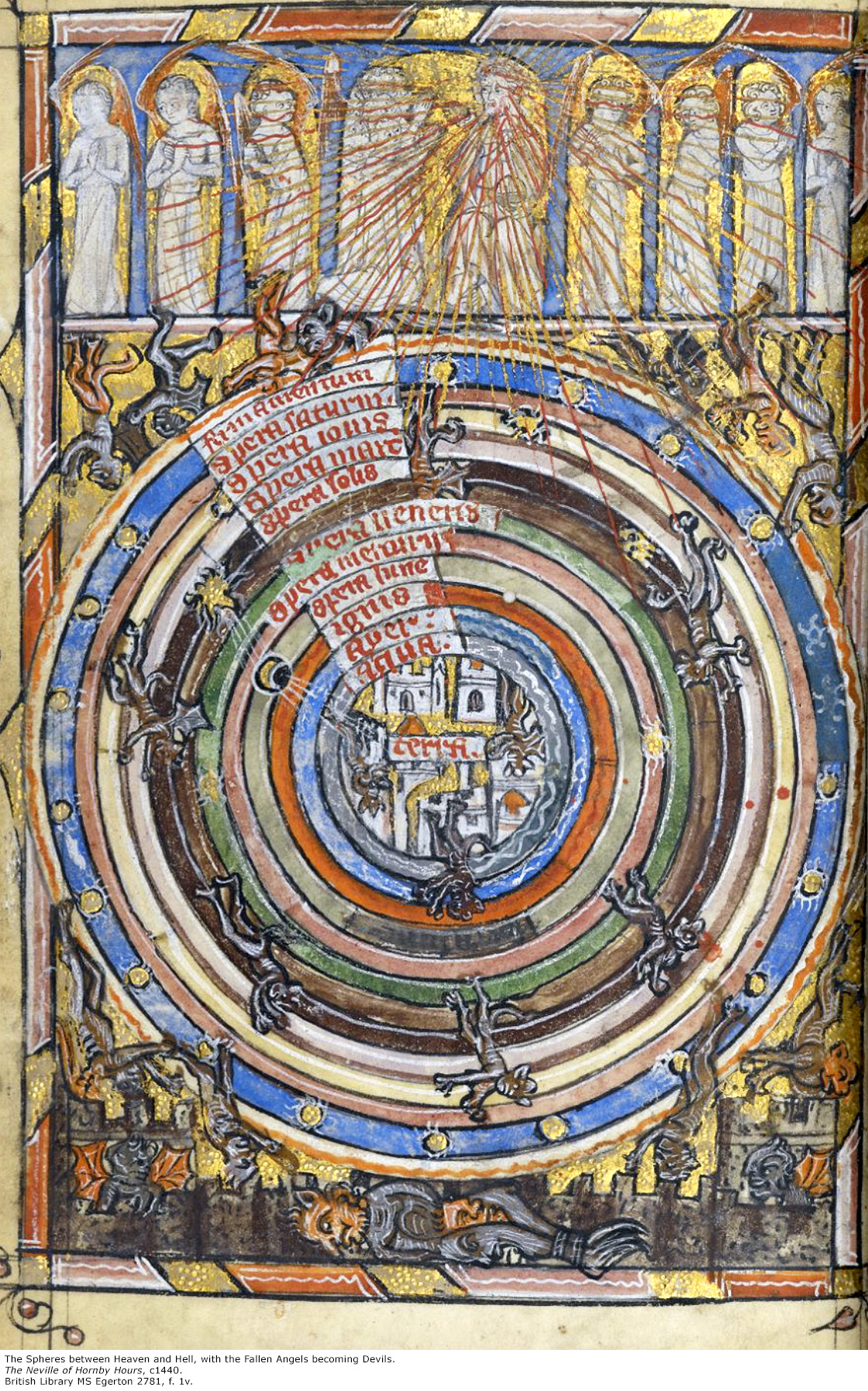
There are seven degrees in the holy sphere
That girdles the outer skies;
There seven hues in the atmosphere
Of the Spirit Paradise;
And the seven lamps burn bright and clear
In the mind, the heart and the eyes
Of the Angel-spirits from every world
That ever and ever arise.

There are seven ages the Angels know
In the courts of Spirit Heaven;
And seven joys through the spirit flow
From the morn of the heart till even;
Seven curtains of light wave to and fro
Where the seven great trumpets the Angels blow,
And the throne of God hath a seven-fold glow,
And the Angel hosts are seven.
And a spiral winds from the worlds to the suns,
And every star that shines
In the path of degrees for ever runs,
And the spirit octave climbs;
And a sevenfold heaven round every one
In the spiral order twines.

There are seven links from God to man,
There are seven links and a threefold span,
And seven spheres in the great degree
Of one created immensity.

There are seven octaves of spirit love
In the heart, the mind, and the heavens above,
And seven degrees in the frailest thing, 
Though it hath but a day for its blossoming.

- Thomas Lake Harris

Tuesday, November 12, 2013

Dr. Bevan Leslie Reid


At Sydney University since 1948,
the notable Scientist and inventor, Dr. Bevan Reid, passed away January 17th, 2010.  He had been a champion of the cause to show the existence of subtle forces in nature.


As a cancer researcher he had tremendous success:


Research by Dr. Bevan Reid lead to the invention of a computerized device which reliably detects cancerous and pre-cancerous cells.

He further developed the polarprobe:
The basic scientific research leading to the development of the new device called Polarprobe, which can detect cervical cancer and pre-cancer on the spot simply by scanning a probe across the cervix.

Dr. Reid conducted experiments with 'aether waves' at the QE II Research Lab at the Sydney University.
Quote:
"Copper sulfate crystals dissolved in water created these aether waves which could be measured by means of a torsion balance a couple of rooms away in another lab down the corridor."
Quote:
Some readers may be interested in Bevan's research on the influence of a mass of lead over distance (through the aether) on the mortality rate of bacteria.
In 1980 he performed experiments on salt crystals which showed that crystal growth in one test tube could affect crystal growth in another- even when separated by several meters.

A heavy lead mass nearby would also affect growth. Such action-at-a distance was proposed by Sir Isaac Newton.

Dr. Reid said that Russian experiments in 1972 showed that infection of normal cells with a virus would cause destruction of healthy cells which were in another dish separated by a few millimeters.

Intrigued, one of Reid's colleagues from the University of Chicago repeated the experiments but could not get them published.
"His research was elegant, but he really got roasted for putting forward an idea like that," Reid recalled.
Reid repeated the experiments using specialized mouse fibroblast cells in two petri dishes and a poison called colchicine. He found cellular disruptions caused by colchicine in the first dish were mirrored in the second dish which did not contain the poison. When the cells in the first dish died, cells in the second dish ultimately recovered.

To Reid's astonishment, lab workers in another building 200 meters away found that mouse fibroblast cells were being affected!


These experiments show how there is truth to the processes of sympathetic magic. They also give us food for thought on healing and how it can be achieved "outside" of the patient.

Saturday, November 09, 2013

Morning & Evening Meditation- Rudolf Steiner


 Given in English to an English pupil:


In the Morning:
Picture to yourself that you are in the midst of cosmic
space, surrounded by Light, and that a voice comes to you from the four points of the compass (a single voice, but coming from four different directions) speaking to you:- 
"Be a strong I. Give thy heart to the Spirit of the World."
(Be very quiet in your soul after this meditation.)


In the Evening:
Review the day in backward order from evening
till morning.
Picture to yourself that you are in the depths of
cosmic space, surrounded by Darkness, and that you are speaking to the Full Moon in the East:-
"I will be a strong I. I will give my heart
to the Spirit of the World."

(Be very quiet in your soul after this meditation)

-Rudolf Steiner