- The first night is of Father God
We go to Him and experience only Him.
This is where we may come back with only an unconscious experience of
Him and not of ourselves. This is His day. Every night we sleep we go to
Him and replenish ourselves etherically. The pear tree examples this
etheric life. He is at the apex of all life. We return with the
blessings of this meeting. Before entering into sleep on this night we
can hold before us the picture of the golden pear tree and its etheric
splendor; knowing that when we arise to once again feel the senses
within our bodies, to infill the limbs and circulate warmly; we have been
to paradise and eaten His fruit that sustains us throughout all of the
worlds.
-B.Hive
The Christian socialism of the Sixth Race/Cultural Period is not to be compared with the past experiments in socialism. Those past experiments in socialism were designated as Ahrimanic by Rudolf Steiner, in that it was a future condition implanted before its time. But that is the point: it is a future condition.
The importance of Brotherhood for the 21st century:
"The
abstract ideal of brotherhood or companionship must become something
real. How can companionship become real? By associating, by truly
uniting with the other person, by no longer fighting people with
different interests but instead COMBINING those different interests.
"Associations
are the living embodiment of companionship. The life-spirit [Budhi] must be
alive in the sphere of rights, and with the Christ Spirit brought into
economic life, spirit-man will come to life in its first beginnings
through associations. The earth, however, yields none of this. Human
beings will only come to this if they let the Christ, who is now
approaching the ether, enter their hearts and minds and souls."
-Rudolf Steiner, Polarities in the Evolution of Mankind
Some will remember that Dr. Steiner said that Robinson Crusoe was an Ahrimanically inspired- man sufficient unto himself, like what is described in the works of Ayn Rand.
The threefold social concept reflects the processes of metabolism, brain/sense and rhythmic, also the relationship of these three processes to the higher man - Manas, Budhi and Atman.
The Budhi quality is one of loving compassion and self sacrifice. It maybe possible to have a rights sphere without this quality, but this is something that was never taught by Dr. Steiner.
Rudolf Steiner on Christian Social Life:
"A social community in
the name of Christ will however be possible, providing we do not insist
on a political state, but rather establish an independent life of the
spirit. This can be Christian through and through. And this independent
life of the spirit will be able to illumine the sphere of life where we
have government and states, a sphere that simply cannot be Christian.
"The result will be that an economic life based on associations can
develop, though this, too, cannot be Christian in itself. The people who
are involved in it will be Christian, however. They will be filled with the Christ-impulse. What we must do is to let people enter into an independent life of the spirit. Then it will be possible to make the whole of social life Christian."
-Rudolf Steiner, Polarities in the Evolution of Mankind, November 1920
The disease in society today is lack of spiritual life:
"People's thoughts in this respect will undergo a complete change, when once they come really to feel the full weight of this fact: that, in a human community where spiritual life plays a merely ideological role, common social life lacks one of the forces that can make and keep it a living organism. What ails the body social today is impotence of spiritual life. And the disease is aggravated by the reluctance to acknowledge its existence. Once the fact is acknowledged there will then be a basis on which to develop the kind of thinking needed for the social movement."
-Rudolf Steiner, Towards Social Renewal
Phillip Ball writes:
There aren't terribly many scientists who study liquids, but I was once one of them, and we tended to shun water. This might make us sound like bakers with an aversion to bread, but we had a good reason: water broke all the rules. There is a perfectly good 'theory of liquids' that has been painstakingly developed since the late nineteenth century, and it is astonishing what it can accomplish in terms of explaining what liquids are and what they do. But it is of rather little use for understanding water.
Here's an example. Many solids can be melted to form liquids, but when they cool and freeze again, they typically shrink and get denser. Fill a cup with molten wax, say, and you'll find it slightly less than brim-full when the wax sets. The same with molten iron or lead, or molten rock, which is why lava contracts and cracks when it cools and we are left with formations like the Giant's Causeway.
But water? We know the answer already, for we take care never to freeze bottles of milk or champagne. The water expands when it becomes ice, and the bottle shatters. Because of this expansion, ice is less dense than water - the same volume of ice ways less than water - and so ice floats on water. If that were not so - if water behaved 'normally', and became denser when it froze - icebergs would sink instead of floating around the polar oceans. There would, in fact, be no North Pole to plant a flag in, for it is nothing but an ice sheet adrift on the Arctic Ocean.
The expansion of water when it freezes bursts our water pipes in winter, and weakens our buildings as water widens cracks when it turns to ice. Many years of such freeze-thaw cycles can reduce rocks to rubble. On the other hand, ice floating on a wintry pond provides a thermal blanket that can stop more heat escaping and keep the water below from freezing solid, to the benefit of pond life.
Aquatic life gets a further advantage from water's oddness. Even before a liquid freezes, it generally contracts slightly as it gets cooler. This is because the molecules in the water jiggle about less frantically when they are colder, and so they have less inclination to push one another apart - just as a regiment of soldiers can pack together more closely than a wildly jiving crowd on a dance floor. Water seems to observe this expectation - until it reaches 4ºC, four degrees above its freezing point. If you cool water below 4ºC, it starts to expand. Only slightly - not as much as it does when it freezes at 0º C - but enough to present a puzzle. It is almost as if the water begins to sense the approach of the freezing-induced expansion.
This means that water is densest at 4ºC; at this temperature, it expands if you heat it or if you cool it. Why 4ºC? In his Guide to the Scientific Knowledge of Things Familiar (1876), the sage Reverend Dr Brewer decides that this has been 'wisely ordained by God'. That explanation doesn't seem to have satisfied scientists for long, if indeed it ever did.
Nevertheless, one might perceive wisdom in this behaviour. It means that the water at the bottom of a cold pond - the densest water - is always a few degrees above freezing. So ponds freeze from the top down, not from the bottom up. This helps them to avoid freezing solid in a bad winter, something that would kill the fish and crush them for good measure.
One of the most striking and fortuitous anomalies of water is that it is a liquid at all. Naively, you would expect water to be a gas at the temperatures and pressures encountered on the Earth's surface. All other similar chemical compounds - hydrogen sulphide, ammonia, hydrogen chloride - are gases under these conditions. By rights, the oceans should all be up in the air, giving us a thick, muggy atmosphere over a parched earth. But something seems to hold water molecules together in the liquid, preventing them so easily from flying apart into a vapour.

Water has a surprising capacity to absorb heat. That's to say, if you want to make water hotter, you have to put in a larger amount of heat, relative to other liquids. This means that it takes longer than it 'should' to boil a kettle, but there are happier consequences too. The oceans are slow to change their temperature, maintaining a constant environment for the organisms that teem within it. Water's large 'heat capacity' also makes the oceans an astonishing reservoir of heat, which ocean currents carry from the tropics (where water is warmed by the sun) to high-latitude regions. This redistributes heat over the planet and reduces the temperature differences between high and low latitudes. The Gulf Stream, bringing warm water from the Gulf of Mexico across the Atlantic Ocean, keeps Northern Europe much warmer than Labrador at the same latitude on the American coast by transporting every day twice as much heat as would be produced by burning all of the coal mined globally in a year.

The list of water's anomalies, compared with other liquids or 'similar' chemical compounds, runs to a few dozen entries. Some are more recondite and revealed only by careful scientific measurement, such as the fact that water gets less rather than more viscous when squeezed. Ice is itself a strange substance too, which can adopt at least fourteen different forms when compressed to high pressures. Water, we must admit, is the most eccentric liquid we know.
Let us then set to work to discipline our will, let us endeavour to awaken within us each morning and each evening-
In the Morning
O Michael, I commend myself to thy protection,
With all the forces of my heart, I place myself
under thy leadership, that so the day that is
now beginning may be indeed a picture of the
right ordering of destiny that belongs to thy Being.
Evening:
I carry my sorrow into the setting Sun,
I lay all my cares in its shining lap
These my cares come back to me filled with
glowing light, warmed through and through with love,
come back to me as helping thoughts, as power to carry out deeds that are filled with joy of sacrifice.
Another translation:
Morning:
O Michael,
Under your protection I place myself,
With your guidance I connect myself,
Wholeheartedly,
So that this day becomes an image
Of your destiny-ordering Will.
O Michael,
Under your protection I place myself,
Wholeheartedly and with a will,
So that this day which is now beginning
Will be an image of your destiny ordered Will.
Evening:
I carry my sorrows into the setting sun,
Place all my worries into her radiating womb,
Purified in love, transformed into light,
They return as helping thoughts,
As strength for self-sacrificing deeds.
Rudolf Steiner, Lecture, 27th November 1919
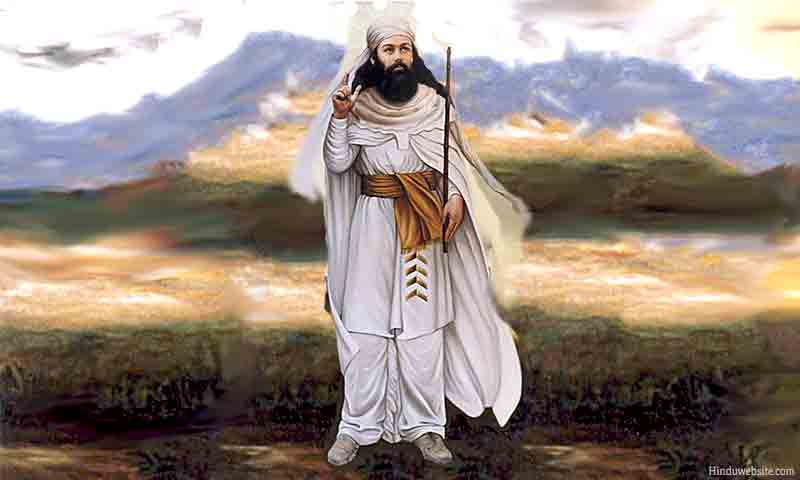
Here follows a passage in which Dr. Steiner explains the notion of redemption as taught by the followers of Zarathustra:
"Wherever we look there is a world that descended from divine-spiritual heights but now has fallen very far from its earlier level.....
"But man has the hope of being able to lead it upwards again."
"We will now further translate into words of our language what an Iranian felt, and try to convey how a teacher would have spoken to his pupils. He might have said: Think of the wolf. The animal living as the physical wolf you now see has fallen from its former estate, has become decadent. Formerly it did not manifest its bad qualities.
"But if good qualities germinate in you and you combine them with your spiritual powers, you can tame this animal; you can instil into it your own good qualities, making the wolf into a docile dog who serves you! ...."
"If I leave Nature as she is, she sinks lower and lower; everything becomes wild. But I can direct my eyes of spirit to a good Power in whom I trust; then that Power will help me and I shall be able to lead upwards again what is in danger of sinking. This Power gives me hope that further development in possible."
-Lecture one, St. Matthew's Gospel
In the above lecture series you can read about Zarathustra's incarnation as Zarathas or Nazarathos, in Chaldea, and his teaching of the Hebrew initiates during the Captivity.
The practices of the Nazarites were carried out in stricter form by the Essenes. The Essenes were under the influence of the Maitreya Bodhisattva who worked through Jeshu Ben Pandira (the Teacher of Righteousness).