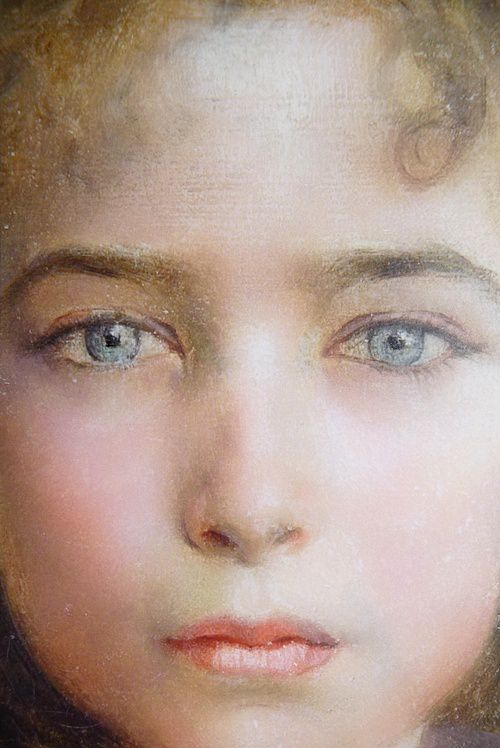
A lecture given in Berlin on the 16th of November 1911. In it are some of Dr. Rudolf Steiner's (Anthroposophy) impressions of the home town of Paracelsus- such an important figure who lived about five hundred years ago:
IT was on a beautiful September day of this year (1911) that my vocation led me through Zurich. And as this was a free day between days of work, I went with some friends to the village of Einsiedeln, close to Zurich. Here is a Benedictine monastery, founded in the early Middle Ages, which has attained a certain celebrity through various circumstances.
Precisely on that September day, what is called in Catholic countries a Pilgrimage-festival was in progress. Einsiedeln was made ready to receive a great number of pilgrims, and expected a lively day, just such a day as periodically occurs in Catholic places of pilgrimage. I myself wished to make a kind of pilgrimage on that occasion, not indeed exactly to Einsiedeln, but from there to a neighboring place.
A carriage was hired, and we drove to what they call there the "Devil's Bridge". By a pretty rough road, up and down hill, we arrived there at last, after a good long stretch, and found a fairly modern guesthouse, not modern in luxury, but built only a comparatively short time ago. On this guesthouse there was a tablet:
Birthplace of the physician and naturalist Philippus Theophrastus Bombastus von Hohenheim, called Paracelsus, 1493-1541.
That was, in short, the goal of my pilgrimage: this birthplace of the famous - in some connections one might say, notorious - Theophrastus Bombastus Paracelsus von Hohenheim. To begin with, we saw a remarkable place, where many roads crossed, everywhere a really luxuriant cultivation, rich growth of flowers, and, at the moment we were there, the immense herds of cattle, so frequently to be seen in Switzerland particularly. The natural character of the Alpine regions gives rise to a very special feeling, hardly to be found anywhere else in Europe: there is something about Nature, as if the plants there spoke a language of their own, as if they wished to say something to us, as if they could become quite talkative.
There is also in that place a spot well adapted to combine with what the Spirit of Nature may say. And there rose before my mind the picture of a boy who, in the first nine years of his life, grew up with that Nature, whose birthplace was actually a house which had once stood on that site, but had been replaced by the abovementioned new one. For, in the fifteenth century, there lived in that place the old physician, Bombast von Hohenheim, whose little son was the future Paracelsus. And anyone who knew the boy, could realize how closely, from his earliest childhood, he had grown up with Nature. One could realize the boy in these natural surroundings, could picture him carrying on intimate, childlike conversations with the plants.
If the exterior of the houses had altered, in a certain respect the external configuration of the landscape was, quite certainly, still that with which the boy Paracelsus had talked innumerable times, from early morning till late evening - except those times when he accompanied his father on his rounds among the adjacent villages. And it may be accepted as certain that even with this little boy, in the midst of that natural scenery, the father could exchange many interesting thoughts concerning the doubtless intelligent questions which that child was already able to ask about what Nature showed in his immediate experience. And much which we can discern in the life of Paracelsus, was ripening then in that child. It confronts us in childlike form when we have before us the picture of the good old man - but very learned licentiate - the old Bombast von Hohenheim, who leads by the hand the Nature-intoxicated boy, so eager for knowledge.
While this picture rose in my mind, I had to remember another which I saw - many years ago, it is true - when I stood before a house in Salzburg, which bore a tablet announcing that in this humble house died Theophrastus Bombastus Paracelsus von Hohenheim, at the age of forty eight years. These two pictures enclosed for me this eventful, quite unique life. If we look a little more closely into the life of Paracelsus, we find rising in his soul - certainly still with the character of the fifteenth and sixteenth centuries - a deep knowledge of Nature, which then became Medical Science Philosophy and then became Theosophy. A deep understanding of Nature, not comparable with what is given us today of external Nature-knowledge through experiment and intellect, but derived from deeper soul-forces, clairvoyant soul-forces, of whose true form we have already been able to give indications in former lectures of this cycle. But what had awakened in Paracelsus these deeper forces, and made it possible for him to see in Nature that which is behind what external sense and external intellect discerns, was actually brought about through his intimate converse with Nature, the kinship which grew up between all his soul-forces and that which buds and blooms and grows in Nature.
Even when the nine-year-old boy moved with his father to Carinthia, he was transplanted into an equally prolific landscape, and could feel akin to all that dwells as Spirit in Nature. And as Paracelsus grew up, his conception of Nature became even more and more individual and quite uniquely personal.
How could it be otherwise! All that was fixed in his mind was closely dependent on his own particular forces and abilities, on his attitude towards things, on the way in which they spoke to him. Hence, throughout his life he attached a special value to having grown up so intimately with Nature. And when he wished to impress those who became his enemies, with the kinship between his innermost being and Nature, he would point to his early upbringing; for instance, in his words:
"Pay heed to my defence: By nature I am not subtly woven, nor is it the way of my country to achieve anything by silk-spinning, we were not reared on figs or mead or wheaten bread, but on cheese, milk and oatmeal; that does not make finical fellows. Therefore he may well be considered rough and rude, who believes himself to be quite courteous and kindly. Thus it happens to me too; what I take for silk, others call ticking and drill."
 |
| Paracelsus by Peter Paul Rubens |
Hence his motto throughout his life could be: "None shall be another's slave, who can for himself remain alone". This permeated his whole manner of life, and shows us the stamp of this man's soul. Hence we can understand that, when later, he came to the University, he could not at all adapt himself to the scholarly way in which he must pursue what he knew by nature, stimulated merely by converse with Nature and talks with his father about medical science. At first he simply could not digest the University methods.
To gain insight into what he had to endure there, we must glance at the way in which Medicine was studied at that time. The old traditions and documents of antiquated medical men, such as Galen and Avicenna, were authoritative above anything else; and the lecturers mainly busied themselves with explaining and commenting upon what was written in those books. This was deeply repugnant to the soul of young Philippus Theophrastus Bombastus von Hohenheim; and he found, above all, that there is a very wide distance between the spiritual efforts and endeavors intuitively recognizable as proceeding directly from Nature, and what has deviated from it so far, as the scholarly approach, as merely intellectual conceptions and ideas. Hence he wished to go through a different school. And through this different school he had already radically gone!
We see Paracelsus having soon forsaken all collegiate teaching; we see him wandering through all the countries of Europe; not only through all the German and Austrian lands, Transylvania, Poland, Hungary, Italy, Spain and Portugal, but also through France, England, Holland, Prussia and Lithuania, as far as Denmark, Norway and Sweden, with the intention - to quote Goethe - of learning everywhere to know "how Nature lives in creating". For what actually hovered before him was the thought: The whole of Nature is indeed a unity, but she speaks many different languages; and precisely as a man learns to recognize how one and the same thing changes its form and is differently shaped in different regions and altered environments, so does he penetrate to the essence of the inner unity to that which, in contrast to all mere sense-perceptions, is the spiritual foundation.
But
he wished to learn, not only how every ore, every metal, springs from
its environment directly in accordance with the configuration of the
mountain-ranges, always according to its habitat, thus forming for
himself a picture of how Nature lives in creating; he wished to learn,
not only how the plants assumed different forms according to climate and
environment; something else hovered also before him.
He
said to himself: The whole human organism is dependent upon its
environment. What man is in body and soul cannot be regarded as of the
same nature everywhere; at least one cannot know Man, by studying him in
one place only. Therefore Paracelsus wandered through the most varied
regions of the earth accessible to him, in order to perceive everywhere -
with a gaze which penetrated deeply into the spiritual - how Man is
related to Nature, according as he is affected by the influences of very
different conditions in climate and the lay of the land; and only by
taking account of these differences everywhere, can one arrive at
enlightenment concerning the healthy and the sick, in the sense of
Paracelsus. Hence he was never satisfied to know any form of sickness in
one place only.
He
said to himself: The delicate substances which make up the human
organism, differ, according as a man lives in Hungary, for instance, in
Spain or in Italy, and no-one knows a man unless he can trace the finer
substances with a gaze which pierces into the depths of these things.
And when he was reproached with what he called his "academy" and others
called his "vagrancy", he pleaded that the Deity does not come to those
who merely "sit behind the stove". He was clear that a man must go where
the divine Spirit weaves and works in most diverse forms in the
creations of Nature. Thus he cultivated a knowledge, which may be
called, in the highest and finest sense a truly individual clairvoyance,
which he alone could possess through being brought up with Nature.
He
felt too, that this knowledge had grown up closely with what his own
inmost soul took for granted, so that he became ever more and more
conscious that what he had learnt directly in the "academy of Nature",
could actually only be made clear by an intimate mode of expression. He
called Nature his "book", and the different regions of the earth, the
"separate pages" of this book, which men read when they pass through
them.
And
by degrees he acquired a deep contempt for those who only studied old
Galen, Avicenna, etc., and through the books of these men, were
alienated from the book of Nature, which lay before them with its pages
outspread. He felt, too, that what he had learnt in this academy of his,
could only be clad in intimate words, and so he realized the necessity
of expressing himself, not in a language which had become alien to his
inner life, the Latin language, in which everything of this kind was
still carried on at the Universities, as we have already indicated. He
saw no necessity to express himself in a language as strange to the
human soul as, on the other hand, the scholarship which made use of it,
was strange to direct Nature. For he did not believe that he could
succeed in so bending and formulating the words that they would directly
express what poured forth from all creation.
Hence
he felt a deep necessity to express in his mother-tongue whatever he
had to express. This involved two consequences. In the first place, he
had - not from arrogance or to win a reputation - a high consciousness
of the value of what he was able to know; for he was essentially modest
with regard to what great Nature awoke in his soul.
So
it came about that he said - because what he spoke concerning Nature
appeared in his soul as in a mirror: One can actually learn nothing of
Medical Science from any other study; for the renewal of Medical Science
Nature must again be directly approached. Hence his haughty words:
"Whoever will follow truth, must enter my monarchy. After me; not I after you. After me, Avicenna, Galen, Rhasis, Montagnana, Mesue, etc., ye of Swabia, ye of Meissen, ye of Cologne, ye of Vienna and the towns on the Danube and Rhine, ye islands of the sea: thou Italy, thou Dalmatia, thou Sarmatia, thou Athens; thou Greek, thou Arab, thou Israelite; after me, not I after you. I shall be monarch, and mine will the monarchy be; I lead the monarchy and encircle your lands."
Not
from arrogance or pride, but from the consciousness of how Nature spoke
through him, he said: "Mine is the monarchy". He meant the monarchy of
Natural Science and Medical knowledge of his day - and the second
consequence was that such knowledge and such a way of thinking placed
him in opposition to the official representatives of his profession. To
begin with, they could not endure his expressing in the German language
what, they considered, could only possibly be expressed in Latin. He was
a complete innovator in this matter. Again, they could not understand
his wishing to learn by wandering through the countries. One thing
above all they could not grasp, namely, that he who grew up with the
whole warp and woof of Nature, should have such a lively feeling for the
way that Man - wherever he may be - is, everywhere, both in the
evolution of his soul and in the culmination of his physical
development, a flower, a fruit, natural to the region he inhabits, and
one must not only see how the plants grow how the animals thrive, but
how there is expressed in the soul of men who are directly interwoven
and grown into Nature, all that plays into them from the whole rest of
Nature.
Hence, Paracelsus expected something of people who, as peasants, as shepherds, even as knackers, had dealings in or with Nature. He was convinced that in what penetrated into their simple knowledge a real knowledge of Nature was contained, a knowledge from which he could learn something, so that a vagrant, as it were, himself, he learned from from vagrants. Hence he said of himself:
Thus it came about that when he wished to apply what he had learnt from the great book of Nature, he stumbled against the opposition of his colleagues, and experienced what those have to suffer who must undergo envy and the sharpest hostility. What they could least forgive him, however, was that, through his deep insight into Nature, he had success where others could not think of success, or where they had applied all that was in their power and could do nothing about it. It is true, when he met with opposition anywhere, he did not hesitate to dip into his haughty consciousness for most bitter words; but if we consider the conditions under which he worked, we must admit that they were thoroughly deserved. When he was forced to discuss some medical question with this or that colleague, he went very far, for instance, when the others talked Latin, which he understood perfectly well, he shouted at them in German, what he considered to be proofs, but what they regarded as folly. And this is a picture of all his clashes with his contemporaries.
What he had gained in insight, can be shown shortly thus. He said:
Thus Man appeared to him in the first place as a single being in the whole great world, the macrocosm. That was one direction from which he regarded Man. And then he said to himself: He who wishes to judge how all the phenomena which are enacted outside in wind and weather, in the rising and setting of the stars, etc., flow, as it were, through human nature, and play into it, must procure for himself an intimate knowledge of all that goes on outside in universal Nature.
Because Paracelsus did not confine himself to the special knowledge of Man, but allowed his perceptive, clairvoyant glance to sweep over the whole macrocosm in Physics, Astronomy, Chemistry and collected together all that he could gather, Man was, for him, a part of the macrocosm.
Side by side with this, however, Man appeared to him as a being in the highest degree self-developmentally living in connection with, or in opposition to, the macrocosm, according to the way in which he works with the substances of the macrocosm. In so far as Man is a part of the macrocosm, Paracelsus regarded him as the lowest, most primitive merely physical and corporeal being. In so far, however, as Man receives into his organism a certain quantity, a certain series, of substances and forces, and develops himself independently, being independently active in them, so far Paracelsus saw, framed as it were in Man something which he called the archaeus, as it were a spiritual architect and overseer, which he also called the spiritual alchymist. And he draws attention to what is perhaps today no longer felt as specially significant, but which he recognized as profoundly occult and illuminating, namely, how this spiritual architect, this spiritual alchymist, transforms external materials into completely dissimilar materials of which Man makes use within himself, as, for instance, the transformation of bread and milk into flesh and blood.
This seemed to him a tremendous riddle. In it was expressed what he saw as the work of the spiritual alchymist, who either fitted harmoniously into the cosmos, or set himself in opposition to it. This was Man viewed by him from a second direction, Man who can have within him a spiritual alchymist who can cause substances either to become poisons destroying the organism, or expedients which develop the organism in the right way and bring it to full expansion.
Then he distinguished a third point: what Man is apart from the outer world. Here Paracelsus found something which we have already been able to indicate, namely that Man in his whole organism is so constituted that there exists in the collaboration of forces and organs, a little world, a microcosm - a copy of the great world.
This however, is something different for Paracelsus, from the first viewpoint. According to his first viewpoint, Man, in so far as the currents of Nature flow through him, is a part of Nature. According to this third view, in so far as the separate parts of Nature work together, he finds in the blood and heart system, the nerves and brain-system, and the reciprocal action of blood and heart, of nerves and brain, a copy of what is figuratively present outside in Nature, in the reciprocal relation of sun and moon. And in the other organs he finds an inner kingdom of heaven, an inner cosmic system. And the external cosmic system is, to him a vast symbol repeated in Man as a little world. And in any disorder which appears in this little world, he sees the third way in which Man can fall ill, that is, can be attached with maladies.
A fourth point of view he saw in passions mental, agitations, desires, impulses, which result in wrath and rage, and then react upon the physical organism.
Finally, he saw a fifth viewpoint, which already today is by no means admitted, in the way Man is articulated into the course of the Universe and how causes of sickness may come to him from the whole course of spiritual evolution.
 Thus Paracelsus developed five points of view, not as a result of theoretical study, but of what he saw concerning Nature and Man, what appeared to him from the direct conception of the relationships of Man to Nature. Because, on the one hand, he directed his attention to the way Man is articulated in Nature and how the several members work together, Paracelsus was able to take up a very special attitude towards the sick. That was his unique quality, that he related himself, not with one, but with all of his soul-forces to the cosmos. Hence his splendid utterance:
As the recognition of a healthy, and a sick man pursues these three lines, it was thus that he wished to present Man before his soul. He did not wish, however, to look only at Man; he wanted to see how the separate objects in Nature were related, both among themselves, and to Man. Thereby something peculiar to him resulted, namely that when he was confronted with a sick man, he immediately saw how Nature worked according to the above-cited viewpoints, his intuitive glance, rising from the depth of his soul, perceived the abnormality of the substances, the abnormality of the organs: he had the whole man before him. He could not clothe in abstract words what then rose before him; what he experienced in force of the sick man, he could not reduce to a formula; but he penetrated into the other, into the sick man. He did not need a name for the malady, but as he plunged, so to speak, into it, something quite new rose to his sight, namely, how he was to combine the substances, how he must put together the materials which he knew in Nature, so as to find a remedy against the malady. It was, however, not only the psychical element into which he plunged, but also into the moral, intellectual and spiritual. Men might call him a vagabond, they might perhaps regard what he did as charlatanry; they might lay stress upon his way of life - how completely destitute he was, the debts he must have incurred, etc. - but it must not be forgotten that he also had the selflessness to make himself one with the sickness which he faced. Hence he was able to say that if he spent all that Nature had given him, on the sick, yet the most important cure would consist of Love. Materials do not cure, said he, it is love that cures. And love certainly passed over from him to his patients, for he saw himself completely translated into the nature of the other man.
The second point, which must have arisen through his specially intimate relationship with Nature, was that in every single case, he saw the remedy which he had applied, effectual; he saw its forces expand in the human organism. This gave him the second point: confident Hope. He called Love and Hope his best healing forces; nor did he ever go to work without love and hope. This man who wandered about as a vagabond, was saturated through and through with the most selfless love. And therewith he had the strangest experiences. His love went so far as to heal those who had no money, entirely without charge. He also had to live, however; people often cheated him about his fee - well, he went on; he didn't bother about it.
Then, however, he came to loggerheads with those about him. Thus, for instance, the following incident occurred. When he was in Basle (for, later - again through a kind of error - he was summoned to Basle as city-physician) he effected many famous cures. So once he was called in to a Canon Lichtenfels, suffering from a disease which no-one could cure. Paracelsus had stipulated for a fee of a hundred Thalers, if he should cure him, and the Canon had agreed to it. Paracelsus then gave him the appropriate remedy, and after three or four applications, the disease was healed. Then the Canon maintained that if the cure was so easy, he would not pay the hundred Thalers, - and Paracelsus had his trouble for nothing. To make an example, however, he actually took legal proceedings against the Canon; but was unjustly treated by the Basle tribunal: he was to moderate his fee. Then, it appears, he distributed abusive papers against the court of justice, and especially against the Canon. That made bad blood, and a friend pointed out to him that it was unsafe for him to remain in Basle, and so, on a foggy night, he fled from the city. Had he passed through the gates half an hour later, he would have been thrown into prison.
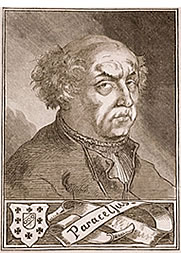
Anyone who knows the unique life-history of this man, will understand the impression, piercing deeply into the heart, made by the picture drawn during the last years of Paracelsus's life: a picture showing a countenance which expresses much that is spiritual. There is much life and much experience in it; it is a life in which soul and body had harshly co-operated. On the one hand, the lines of old age, the wrinkles and the bald head of the suffering, comparatively young man, show what struggle and striving, what an abstract of the evolution of his time, lay in Paracelsus; and, on the other hand, is seen the tragedy of one who has opposed himself to his age. And even if it is only a legend, if we are not able to take literally what is said to have happened in Salzburg, namely, that the physicians of that town once decided to instigate one of his servants to throw Paracelsus down from a height - he did in fact meet his death through such a crash, and was then carried into his house - even if it is not true, one is bound to say that the life of Paracelsus was such that there was no need for anyone to crack his skull; they had made it so wretched, so bitter, for him, that we can well understand his early death.
Such a man - to have him modeled still more clearly before us, we should have to fill in many lines and details - such a man as Paracelsus has made a deep impression upon all who in after-times sought the way to the spiritual world. And he who knows the life of Goethe, feels that Paracelsus with whom he made himself early acquainted, left a great impression upon him. For in Goethe also there lay, as with Paracelsus, something which we may call a growing up with surrounding Nature. On another occasion I emphasized how Goethe, as a seven-year-old boy, showed his interweaving with Nature by building his own altar - thus revealing how much religious enlightenment concerning Nature he had gained from his surroundings - He took his father's music-desk, laid stones and plants from his father's collection upon it, then, having this natural altar, he waited till the sun rose in the morning, gathered the sunbeams with a burning-glass, and thus lighted a pastille which he had fastened on the top, to kindle a sacrificial fire set alight by Nature itself; so to bring a sacrifice to the God of great Nature.
This growing up with Nature appeared so early in Goethe, and unfolded itself later in such a way that through the fragrance of Nature, great clairvoyant ideas sprang up in him. And we see in Goethe, when he was already in Weimar, how this way of thinking was working further in him, in the prose-hymn To Nature:
There he learnt how external forms could express the same being in most diverse ways. Thus we see how - everywhere seeking unity in multiplicity - he tried to recognize the Spirit in what was uniform. And how significant are the words which Goethe addressed to Knebel from Sicily on August 18th 1789:
No wonder, then, that he made acquaintance with the life of Paracelsus, that this Paracelsus-life rose to life side by side with the Faust-life in Goethe's soul. And if we let the life of Goethe work powerfully upon us, then his Faust stands before us, not merely as the Faust of the 16th century, who, in a certain relationship, was a contemporary of Paracelsus, but Paracelsus himself stands before us, as he impressed himself upon Goethe. In the Faust-figure we have something with which Paracelsus collaborated. Let us consider for a moment the answer to the question: Why did Goethe precisely hit upon Faust?
We are told in the legend of Faust that, for a time he laid the Bible on the shelf, became a Doctor of Medicine, and studied the forces of Nature. Paracelsus did indeed remain true to the Bible, and was even an expert in the Scriptures, but we see in him, how he "shelved" the old medical authorities, Galen, Avicenna, etc. - even on one occasion burnt them - and went straight to the great book of Nature. That was a trait which made a strong impression upon Goethe. And moreover, do we not see similarity, when Faust translates the Bible into his "beloved German", so that what can be derived from it, may flow directly into his soul - and Paracelsus renders what is Natural Science for him, in his beloved German? And many other trails we could cite, showing that there dwelt in Goethe something of the resurrected Paracelsus, when he created the Faust-figure. Yes, we might say that where Faust tells of the intimate relationship between himself and his father - Goethe only transposing into the ideal - we see what often passed between Paracelsus and his father when they sallied forth together. In short, Paracelsus may appear before our eyes, when we are impressed by Faust as a figure of Goethe's creation, of Goethe's art.
When we have the two figures side by side before us, something rises to meet us, which shows in a no less characteristic fashion, how Goethe could have made something quite different, both of the Faust-figure and of the 16th century Paracelsus-figure. Let us study Goethe's Faust: he is dissatisfied with what the different Sciences - Medicine, Theology, etc. - can give him. Goethe, however, could not represent Faust in such a way as to place his direct merging into Nature, before us. Not that Goethe was incapable of doing this; he must have had some reason for not doing it. Why did he not do it?
To begin with, it strikes us - and this is not merely an external circumstance, an external fact - that Paracelsus - his inwardly harmonious soul having grown up with the Spirit of Nature - died at just about the age in which we can picture Faust saying to himself:
And then, what Faust further experienced, he experienced at an age that Paracelsus never reached in the physical world. Thus Goethe sets before us a kind of Paracelsus, at the age at which Paracelsus died; but a Paracelsus who could not have grown up with the spirit of Nature.
And how does he set him before us? Although he shows that Faust had attained to a deep understanding of Nature, and to a kind of kinship with Nature - although Goethe shows this, yet there is a difference between Paracelsus and Faust. We feel this when Faust speaks thus to the Spirit in Nature:
Faust, who was previously dissevered from Nature, now grows as it were together with her. But it cannot be shown that Faust penetrates so vitally into the details of Nature, into the close particularisations of Nature, as Paracelsus did; it cannot be shown that this appears directly, while he is speaking to the sublime Spirit of Nature. Goethe cannot show us that Faust grew up with Nature; he is obliged to show us a purely inner soul-evolution: Faust had to experience an evolution purely of the soul and spirit, in order to arrive at the profundity of created Nature and the World. So we see that, although Faust often reminds us of Paracelsus, yet all that he experiences is gone through in the moral sphere, intellectually, or in the life of emotion, whereas Paracelsus has so to speak, antennae reaching out directly into Nature. And so far does this go, that when, at the end of Part II, Faust is able to rise to selflessness, to fervent love, to a spiritual height, this is not because he grows closer to Nature, but rather because he is farther withdrawn from her.
Goethe makes Faust go blind:
Thus to bring his Faust to the same goal as that which Paracelsus reached, Goethe made him take an inward, spiritual path. If we consider the cause of this, we arrive at the explanation that the Powers of the age condition the successive evolution-epochs, condition historical life. Then we come to realize that there is meaning in the fact that the year of Paracelsus's death lies slightly before that great upheaval for Natural Science evoked by the work of Copernicus. Paracelsus's life falls in the epoch when it was still accepted as correct that the Earth stood still in the universe and the Sun moved round it; this still operated for Paracelsus also. It was not until after his death that the completely different way of regarding the Sun - and world-system - came in. The ground was actually dragged from under men's feet; he who now-a-days accepts the Copernican system as a matter of course, can have no idea of the storm which broke out, when the Earth was "set in motion". We may say that the ground beneath men's feet literally rocked. The effect of this however, was that when Man stood at the peak of culture, the Spirit no longer flowed directly into his soul like an aroma, as it did with Paracelsus. Had Copernicus confined himself to what the senses perceive, he would never have established his world-system; but as he did not credit the senses, he was able to establish it by going beyond sense-appearance by means of intellect and reason. Such was the course of evolution. Man had to develop his spirit and his reason directly. And the centuries since the 16th have not passed without significance.
While Goethe had to raise his Faust from a Paracelsus-figure of the 16th century to a Faust-figure of the 18th, he had to take into account that Man could no longer unite with Nature in such a direct and primitive way as Paracelsus did. Hence Faust was a character who could not reveal the forces of existence, the meaning of being, through a direct growing up with Nature, but only through the hidden forces from the depths of the soul. At the same time, however, the essential point appears, namely, that the stream of existence does not flow meaninglessly past mankind. As a great, outstanding figure, Paracelsus is a son of his age. And in Faust, Goethe has given us a picture, a figure poetically created, whom in a certain sense, he made a son of his age, who learnt to use reason and intellect for the Natural Science of his age, and could also elaborate the mystical element. Hence we must say, the fact that Goethe felt himself compelled to present, not a Paracelsus-figure, but something different, shows the whole section of time between the 16th and the 18th centuries, in which the evolution of European humanity was carried out. The significance of such a section appears in the greatest geniuses, and therein lies the difference between these two figures. For those who wish to understand Goethe, it is in the highest degree interesting to study his creation of the Faust-figure, for his Faust makes clear to us more about himself than any of his other characters.
If we consider Spiritual Science or Anthroposophy from the point of view of these observations, we can feel that it is clearly related to Goethe, and in another way, also closely related to Paracelsus. In what way to Paracelsus? Paracelsus could obtain the deepest insight into Nature from the forces developed in his soul through direct intercourse with Nature; but the age in which he who advances with evolution, can reach the foundations of existence as Paracelsus did, passed away with Copernicus, Galileo, Giordano Bruno and Kepler. Another age has dawned in Faust, and Goethe has shown the type of this age - an age in which work must be done with the hidden forces of the soul, so that from the depths of the soul, higher forces of the sense may grow. As the eyes see colors, the ears hear tones, so will these higher senses perceive what is in the environment as Spirit, and what with the ordinary senses, cannot be seen as Spirit. So then, it is not by growing one with Nature as Paracelsus did, that modern Man must experience the deeper soul-forces, but by turning away from Nature. When however, he reaches the point of raising these deeper forces out of his soul, of developing an understanding for the spiritual and supernatural, which lives and weaves unseen behind the visible, the sense-perceived, in Nature, when Man elaborates the Faust-element in himself, then at last, the Faust-element will become clairvoyant insight into Nature. And in a certain way, by the unfolding of the inner Spirit, every man can experience (he does not need to go blind, for this), even if he does not believe the riddle of the world to be solved - he can yet experience, through what his eyes and external senses teach him, that he can nevertheless say: "Within, there shines a brilliant light". And that is something which can lead us nearer to the Spirit that bears sway within us all.
And so the path from Paracelsus to Goethe is, in the highest degree, interesting, when we see coming to life again in the Faust-figure, that which for Paracelsus, and also for Faust, was the essential thing, namely, that Man cannot penetrate with his external senses into the depths of the universe, and into the laws with which the eternal, immortal Spirit of Man is akin, but only through a direct growing up with Nature, as in Paracelsus, or through the development of higher senses, as Goethe indicated - though only poetically - in the continuation of the 16th century Faust-figure. So more and more for Paracelsus, that became a principle, which Goethe had emphasized for his Faust, with the words:
To the Spirit, however, she can be revealed. This is the correct interpretation of Goethe's words. For when Goethe evoked the echo of Paracelsus in Faust, he was in complete understanding with Paracelsus, and Paracelsus would have accepted, with Goethe, the truth of the sagacious words:
And to this, Goethe adds - this was when he first conceived Faust, when he himself was still youthfully arrogant, and in the sense of Paracelsus, not belonging to the "super-fine, the cat-in-pattens" type:
Later he altered this to: "Mocking themselves quite unawares", as we find it now in Faust. This means, however, that no one attempting to approach Nature without having developed the higher forces of knowledge, can discern the foundations of Nature, nor can he discern to what extent the immortal Spirit of Man is interdependent on Nature, how he resembles it, or to quote Jacob Boheme, where he "stood of yore".
He who follows the path from Paracelsus to Goethe, as we have tried to sketch it with a few strokes today, finds that Paracelsus and Goethe are living adherents of the opposite principle - not of that conception of Nature and the world, met with in Goethe's lines:
No! Paracelsus and Goethe so approach Nature, so approach the human being, that for them, the following is true:
 |
| By Hans Holbein the Younger |
Hence, Paracelsus expected something of people who, as peasants, as shepherds, even as knackers, had dealings in or with Nature. He was convinced that in what penetrated into their simple knowledge a real knowledge of Nature was contained, a knowledge from which he could learn something, so that a vagrant, as it were, himself, he learned from from vagrants. Hence he said of himself:
"I pursued my art at the risk of my life, and was not ashamed to learn from tramps, executioners and shearers; my teaching was tried more severely than silver, in poverty, fears, wars and afflictions."That, they could not forgive him. And when, later he was called to Basle University (almost through an error on the part of those who represented his profession), one of the learned fraternity noticed with horror that Paracelsus went out, not in the paraphernalia customary with professors, but walking the streets like a tramp, like a dustman. That could not be tolerated; that injured the prestige of the whole profession.
Thus it came about that when he wished to apply what he had learnt from the great book of Nature, he stumbled against the opposition of his colleagues, and experienced what those have to suffer who must undergo envy and the sharpest hostility. What they could least forgive him, however, was that, through his deep insight into Nature, he had success where others could not think of success, or where they had applied all that was in their power and could do nothing about it. It is true, when he met with opposition anywhere, he did not hesitate to dip into his haughty consciousness for most bitter words; but if we consider the conditions under which he worked, we must admit that they were thoroughly deserved. When he was forced to discuss some medical question with this or that colleague, he went very far, for instance, when the others talked Latin, which he understood perfectly well, he shouted at them in German, what he considered to be proofs, but what they regarded as folly. And this is a picture of all his clashes with his contemporaries.
What he had gained in insight, can be shown shortly thus. He said:
"A man standing before us as a sick or a healthy being, is not an isolated individual, an isolated species; he is implanted in the whole of great Nature. And what occurs in the man as healthy or sick phenomena, can only be judged, in a certain sense, if we know all the influences proceeding from the great world, the macrocosm, which draw the man into their circles."
Thus Man appeared to him in the first place as a single being in the whole great world, the macrocosm. That was one direction from which he regarded Man. And then he said to himself: He who wishes to judge how all the phenomena which are enacted outside in wind and weather, in the rising and setting of the stars, etc., flow, as it were, through human nature, and play into it, must procure for himself an intimate knowledge of all that goes on outside in universal Nature.
Because Paracelsus did not confine himself to the special knowledge of Man, but allowed his perceptive, clairvoyant glance to sweep over the whole macrocosm in Physics, Astronomy, Chemistry and collected together all that he could gather, Man was, for him, a part of the macrocosm.
Side by side with this, however, Man appeared to him as a being in the highest degree self-developmentally living in connection with, or in opposition to, the macrocosm, according to the way in which he works with the substances of the macrocosm. In so far as Man is a part of the macrocosm, Paracelsus regarded him as the lowest, most primitive merely physical and corporeal being. In so far, however, as Man receives into his organism a certain quantity, a certain series, of substances and forces, and develops himself independently, being independently active in them, so far Paracelsus saw, framed as it were in Man something which he called the archaeus, as it were a spiritual architect and overseer, which he also called the spiritual alchymist. And he draws attention to what is perhaps today no longer felt as specially significant, but which he recognized as profoundly occult and illuminating, namely, how this spiritual architect, this spiritual alchymist, transforms external materials into completely dissimilar materials of which Man makes use within himself, as, for instance, the transformation of bread and milk into flesh and blood.
This seemed to him a tremendous riddle. In it was expressed what he saw as the work of the spiritual alchymist, who either fitted harmoniously into the cosmos, or set himself in opposition to it. This was Man viewed by him from a second direction, Man who can have within him a spiritual alchymist who can cause substances either to become poisons destroying the organism, or expedients which develop the organism in the right way and bring it to full expansion.
Then he distinguished a third point: what Man is apart from the outer world. Here Paracelsus found something which we have already been able to indicate, namely that Man in his whole organism is so constituted that there exists in the collaboration of forces and organs, a little world, a microcosm - a copy of the great world.
This however, is something different for Paracelsus, from the first viewpoint. According to his first viewpoint, Man, in so far as the currents of Nature flow through him, is a part of Nature. According to this third view, in so far as the separate parts of Nature work together, he finds in the blood and heart system, the nerves and brain-system, and the reciprocal action of blood and heart, of nerves and brain, a copy of what is figuratively present outside in Nature, in the reciprocal relation of sun and moon. And in the other organs he finds an inner kingdom of heaven, an inner cosmic system. And the external cosmic system is, to him a vast symbol repeated in Man as a little world. And in any disorder which appears in this little world, he sees the third way in which Man can fall ill, that is, can be attached with maladies.
A fourth point of view he saw in passions mental, agitations, desires, impulses, which result in wrath and rage, and then react upon the physical organism.
Finally, he saw a fifth viewpoint, which already today is by no means admitted, in the way Man is articulated into the course of the Universe and how causes of sickness may come to him from the whole course of spiritual evolution.
"Through Feeling we learn to know God the Father in the world; through Faith we learn to recognize Christ, the Son; through Imagination we learn to recognize the Spirit."
As the recognition of a healthy, and a sick man pursues these three lines, it was thus that he wished to present Man before his soul. He did not wish, however, to look only at Man; he wanted to see how the separate objects in Nature were related, both among themselves, and to Man. Thereby something peculiar to him resulted, namely that when he was confronted with a sick man, he immediately saw how Nature worked according to the above-cited viewpoints, his intuitive glance, rising from the depth of his soul, perceived the abnormality of the substances, the abnormality of the organs: he had the whole man before him. He could not clothe in abstract words what then rose before him; what he experienced in force of the sick man, he could not reduce to a formula; but he penetrated into the other, into the sick man. He did not need a name for the malady, but as he plunged, so to speak, into it, something quite new rose to his sight, namely, how he was to combine the substances, how he must put together the materials which he knew in Nature, so as to find a remedy against the malady. It was, however, not only the psychical element into which he plunged, but also into the moral, intellectual and spiritual. Men might call him a vagabond, they might perhaps regard what he did as charlatanry; they might lay stress upon his way of life - how completely destitute he was, the debts he must have incurred, etc. - but it must not be forgotten that he also had the selflessness to make himself one with the sickness which he faced. Hence he was able to say that if he spent all that Nature had given him, on the sick, yet the most important cure would consist of Love. Materials do not cure, said he, it is love that cures. And love certainly passed over from him to his patients, for he saw himself completely translated into the nature of the other man.
The second point, which must have arisen through his specially intimate relationship with Nature, was that in every single case, he saw the remedy which he had applied, effectual; he saw its forces expand in the human organism. This gave him the second point: confident Hope. He called Love and Hope his best healing forces; nor did he ever go to work without love and hope. This man who wandered about as a vagabond, was saturated through and through with the most selfless love. And therewith he had the strangest experiences. His love went so far as to heal those who had no money, entirely without charge. He also had to live, however; people often cheated him about his fee - well, he went on; he didn't bother about it.
Then, however, he came to loggerheads with those about him. Thus, for instance, the following incident occurred. When he was in Basle (for, later - again through a kind of error - he was summoned to Basle as city-physician) he effected many famous cures. So once he was called in to a Canon Lichtenfels, suffering from a disease which no-one could cure. Paracelsus had stipulated for a fee of a hundred Thalers, if he should cure him, and the Canon had agreed to it. Paracelsus then gave him the appropriate remedy, and after three or four applications, the disease was healed. Then the Canon maintained that if the cure was so easy, he would not pay the hundred Thalers, - and Paracelsus had his trouble for nothing. To make an example, however, he actually took legal proceedings against the Canon; but was unjustly treated by the Basle tribunal: he was to moderate his fee. Then, it appears, he distributed abusive papers against the court of justice, and especially against the Canon. That made bad blood, and a friend pointed out to him that it was unsafe for him to remain in Basle, and so, on a foggy night, he fled from the city. Had he passed through the gates half an hour later, he would have been thrown into prison.
Anyone who knows the unique life-history of this man, will understand the impression, piercing deeply into the heart, made by the picture drawn during the last years of Paracelsus's life: a picture showing a countenance which expresses much that is spiritual. There is much life and much experience in it; it is a life in which soul and body had harshly co-operated. On the one hand, the lines of old age, the wrinkles and the bald head of the suffering, comparatively young man, show what struggle and striving, what an abstract of the evolution of his time, lay in Paracelsus; and, on the other hand, is seen the tragedy of one who has opposed himself to his age. And even if it is only a legend, if we are not able to take literally what is said to have happened in Salzburg, namely, that the physicians of that town once decided to instigate one of his servants to throw Paracelsus down from a height - he did in fact meet his death through such a crash, and was then carried into his house - even if it is not true, one is bound to say that the life of Paracelsus was such that there was no need for anyone to crack his skull; they had made it so wretched, so bitter, for him, that we can well understand his early death.
Such a man - to have him modeled still more clearly before us, we should have to fill in many lines and details - such a man as Paracelsus has made a deep impression upon all who in after-times sought the way to the spiritual world. And he who knows the life of Goethe, feels that Paracelsus with whom he made himself early acquainted, left a great impression upon him. For in Goethe also there lay, as with Paracelsus, something which we may call a growing up with surrounding Nature. On another occasion I emphasized how Goethe, as a seven-year-old boy, showed his interweaving with Nature by building his own altar - thus revealing how much religious enlightenment concerning Nature he had gained from his surroundings - He took his father's music-desk, laid stones and plants from his father's collection upon it, then, having this natural altar, he waited till the sun rose in the morning, gathered the sunbeams with a burning-glass, and thus lighted a pastille which he had fastened on the top, to kindle a sacrificial fire set alight by Nature itself; so to bring a sacrifice to the God of great Nature.
This growing up with Nature appeared so early in Goethe, and unfolded itself later in such a way that through the fragrance of Nature, great clairvoyant ideas sprang up in him. And we see in Goethe, when he was already in Weimar, how this way of thinking was working further in him, in the prose-hymn To Nature:
"Nature! we are encircled and entwined by her, powerless to escape from her, powerless to enter more deeply into her. Unbidden and unwarned she draws us into the circle of her dance and urges us forward with her, until, wearied, we sink into her arms."
(Goethe's Writings on Natural Science, Rudolf Steiner.)In another way, too, we see much resemblance between Paracelsus and Goethe. Thus we see how Goethe was a true disciple of Nature in Botany and Zoology. We can also observe him on his Italian tour, striving to recognize spiritually the character of natural objects, by observing how they show unity in multiplicity. How beautiful it is when he sees how the simple coltsfoot, which he had known in Germany, shows itself transformed in Italy.
There he learnt how external forms could express the same being in most diverse ways. Thus we see how - everywhere seeking unity in multiplicity - he tried to recognize the Spirit in what was uniform. And how significant are the words which Goethe addressed to Knebel from Sicily on August 18th 1789:
"According to what I have seen of plants and fish in Sicily, and Naples, I should have been much tempted, if I had been ten years younger, to make a journey to India, not to discover anything new, but to look at what has been discovered in my own way".To look in the right intuitive spiritual way at what is displayed to the world of sense was what he wanted. It was the Spirit in Nature that Paracelsus pursued; Goethe also pursued the Spirit.
No wonder, then, that he made acquaintance with the life of Paracelsus, that this Paracelsus-life rose to life side by side with the Faust-life in Goethe's soul. And if we let the life of Goethe work powerfully upon us, then his Faust stands before us, not merely as the Faust of the 16th century, who, in a certain relationship, was a contemporary of Paracelsus, but Paracelsus himself stands before us, as he impressed himself upon Goethe. In the Faust-figure we have something with which Paracelsus collaborated. Let us consider for a moment the answer to the question: Why did Goethe precisely hit upon Faust?
We are told in the legend of Faust that, for a time he laid the Bible on the shelf, became a Doctor of Medicine, and studied the forces of Nature. Paracelsus did indeed remain true to the Bible, and was even an expert in the Scriptures, but we see in him, how he "shelved" the old medical authorities, Galen, Avicenna, etc. - even on one occasion burnt them - and went straight to the great book of Nature. That was a trait which made a strong impression upon Goethe. And moreover, do we not see similarity, when Faust translates the Bible into his "beloved German", so that what can be derived from it, may flow directly into his soul - and Paracelsus renders what is Natural Science for him, in his beloved German? And many other trails we could cite, showing that there dwelt in Goethe something of the resurrected Paracelsus, when he created the Faust-figure. Yes, we might say that where Faust tells of the intimate relationship between himself and his father - Goethe only transposing into the ideal - we see what often passed between Paracelsus and his father when they sallied forth together. In short, Paracelsus may appear before our eyes, when we are impressed by Faust as a figure of Goethe's creation, of Goethe's art.
When we have the two figures side by side before us, something rises to meet us, which shows in a no less characteristic fashion, how Goethe could have made something quite different, both of the Faust-figure and of the 16th century Paracelsus-figure. Let us study Goethe's Faust: he is dissatisfied with what the different Sciences - Medicine, Theology, etc. - can give him. Goethe, however, could not represent Faust in such a way as to place his direct merging into Nature, before us. Not that Goethe was incapable of doing this; he must have had some reason for not doing it. Why did he not do it?
To begin with, it strikes us - and this is not merely an external circumstance, an external fact - that Paracelsus - his inwardly harmonious soul having grown up with the Spirit of Nature - died at just about the age in which we can picture Faust saying to himself:
"I've now, alas! Philosophy,
Med'cine and Jurisprudence too,
And, to my cost Theology,
With ardent labor, studied through".
And then, what Faust further experienced, he experienced at an age that Paracelsus never reached in the physical world. Thus Goethe sets before us a kind of Paracelsus, at the age at which Paracelsus died; but a Paracelsus who could not have grown up with the spirit of Nature.
And how does he set him before us? Although he shows that Faust had attained to a deep understanding of Nature, and to a kind of kinship with Nature - although Goethe shows this, yet there is a difference between Paracelsus and Faust. We feel this when Faust speaks thus to the Spirit in Nature:
"Spirit sublime! Thou gav'st me, gav'st me all
For which I prayed. Not vainly hast thou turned
To me thy countenance in flaming fire.
Thou gav'st me glorious Nature as a royal realm,
And also power to feel and enjoy her.
Not merely with a cold and wondering glance,
Thou dost permit me to look in her deep breast,
As in the bosom of a friend to gaze.
Before me thou dost lead her living tribes,
And dost in silent grove, in air and stream
Teach me to know my kindred."
Faust, who was previously dissevered from Nature, now grows as it were together with her. But it cannot be shown that Faust penetrates so vitally into the details of Nature, into the close particularisations of Nature, as Paracelsus did; it cannot be shown that this appears directly, while he is speaking to the sublime Spirit of Nature. Goethe cannot show us that Faust grew up with Nature; he is obliged to show us a purely inner soul-evolution: Faust had to experience an evolution purely of the soul and spirit, in order to arrive at the profundity of created Nature and the World. So we see that, although Faust often reminds us of Paracelsus, yet all that he experiences is gone through in the moral sphere, intellectually, or in the life of emotion, whereas Paracelsus has so to speak, antennae reaching out directly into Nature. And so far does this go, that when, at the end of Part II, Faust is able to rise to selflessness, to fervent love, to a spiritual height, this is not because he grows closer to Nature, but rather because he is farther withdrawn from her.
Goethe makes Faust go blind:
"Night seems to penetrate deeply and still more deep,Faust becomes a mystic, becomes a personality developing his soul in every direction, a personality who, in the Mephisto-forces, sees himself opposed to all adversaries of the soul. In a word, Faust has to develop himself purely within his soul, has to waken the spirit in his soul. Then when this spirit is awakened within him - not, as with Paracelsus, in direct intercourse with Nature - then indeed, what is clear to the senses is destroyed by his going blind, by his being no longer able physically to see, "but yet within there shines a brilliant light". Faust becomes aware (this we learn from the end of the poem) that when a man unfolds his inner soul-forces, the Spirit which prevails in Nature also, urges him upward. And when this Spirit is sufficiently developed, he then attains directly to that which pervades both Man and Nature as the spiritual force. To this then, Faust attained eventually.
"But yet, within, clear light is shining."
Thus to bring his Faust to the same goal as that which Paracelsus reached, Goethe made him take an inward, spiritual path. If we consider the cause of this, we arrive at the explanation that the Powers of the age condition the successive evolution-epochs, condition historical life. Then we come to realize that there is meaning in the fact that the year of Paracelsus's death lies slightly before that great upheaval for Natural Science evoked by the work of Copernicus. Paracelsus's life falls in the epoch when it was still accepted as correct that the Earth stood still in the universe and the Sun moved round it; this still operated for Paracelsus also. It was not until after his death that the completely different way of regarding the Sun - and world-system - came in. The ground was actually dragged from under men's feet; he who now-a-days accepts the Copernican system as a matter of course, can have no idea of the storm which broke out, when the Earth was "set in motion". We may say that the ground beneath men's feet literally rocked. The effect of this however, was that when Man stood at the peak of culture, the Spirit no longer flowed directly into his soul like an aroma, as it did with Paracelsus. Had Copernicus confined himself to what the senses perceive, he would never have established his world-system; but as he did not credit the senses, he was able to establish it by going beyond sense-appearance by means of intellect and reason. Such was the course of evolution. Man had to develop his spirit and his reason directly. And the centuries since the 16th have not passed without significance.
While Goethe had to raise his Faust from a Paracelsus-figure of the 16th century to a Faust-figure of the 18th, he had to take into account that Man could no longer unite with Nature in such a direct and primitive way as Paracelsus did. Hence Faust was a character who could not reveal the forces of existence, the meaning of being, through a direct growing up with Nature, but only through the hidden forces from the depths of the soul. At the same time, however, the essential point appears, namely, that the stream of existence does not flow meaninglessly past mankind. As a great, outstanding figure, Paracelsus is a son of his age. And in Faust, Goethe has given us a picture, a figure poetically created, whom in a certain sense, he made a son of his age, who learnt to use reason and intellect for the Natural Science of his age, and could also elaborate the mystical element. Hence we must say, the fact that Goethe felt himself compelled to present, not a Paracelsus-figure, but something different, shows the whole section of time between the 16th and the 18th centuries, in which the evolution of European humanity was carried out. The significance of such a section appears in the greatest geniuses, and therein lies the difference between these two figures. For those who wish to understand Goethe, it is in the highest degree interesting to study his creation of the Faust-figure, for his Faust makes clear to us more about himself than any of his other characters.
If we consider Spiritual Science or Anthroposophy from the point of view of these observations, we can feel that it is clearly related to Goethe, and in another way, also closely related to Paracelsus. In what way to Paracelsus? Paracelsus could obtain the deepest insight into Nature from the forces developed in his soul through direct intercourse with Nature; but the age in which he who advances with evolution, can reach the foundations of existence as Paracelsus did, passed away with Copernicus, Galileo, Giordano Bruno and Kepler. Another age has dawned in Faust, and Goethe has shown the type of this age - an age in which work must be done with the hidden forces of the soul, so that from the depths of the soul, higher forces of the sense may grow. As the eyes see colors, the ears hear tones, so will these higher senses perceive what is in the environment as Spirit, and what with the ordinary senses, cannot be seen as Spirit. So then, it is not by growing one with Nature as Paracelsus did, that modern Man must experience the deeper soul-forces, but by turning away from Nature. When however, he reaches the point of raising these deeper forces out of his soul, of developing an understanding for the spiritual and supernatural, which lives and weaves unseen behind the visible, the sense-perceived, in Nature, when Man elaborates the Faust-element in himself, then at last, the Faust-element will become clairvoyant insight into Nature. And in a certain way, by the unfolding of the inner Spirit, every man can experience (he does not need to go blind, for this), even if he does not believe the riddle of the world to be solved - he can yet experience, through what his eyes and external senses teach him, that he can nevertheless say: "Within, there shines a brilliant light". And that is something which can lead us nearer to the Spirit that bears sway within us all.
And so the path from Paracelsus to Goethe is, in the highest degree, interesting, when we see coming to life again in the Faust-figure, that which for Paracelsus, and also for Faust, was the essential thing, namely, that Man cannot penetrate with his external senses into the depths of the universe, and into the laws with which the eternal, immortal Spirit of Man is akin, but only through a direct growing up with Nature, as in Paracelsus, or through the development of higher senses, as Goethe indicated - though only poetically - in the continuation of the 16th century Faust-figure. So more and more for Paracelsus, that became a principle, which Goethe had emphasized for his Faust, with the words:
"Inscrutable in broadest light,This does not mean - either in the sense of Paracelsus or of Goethe - that Man cannot search out the Spirit of Nature, but that the Spirit in Nature, does indeed reveal itself to the Spirit awakened in the soul, though not with the instruments used in the laboratory, not with levers and screws. Hence Goethe says:
"To be unveiled by force she doth refuse.
"What she reveals not to thy mental sight,
"Thou wilt not wrest from her with bars and screws."
"What she reveals not to thy mental sight,
"Thou wilt not wrest from her with bars and screws".
To the Spirit, however, she can be revealed. This is the correct interpretation of Goethe's words. For when Goethe evoked the echo of Paracelsus in Faust, he was in complete understanding with Paracelsus, and Paracelsus would have accepted, with Goethe, the truth of the sagacious words:
"[If he] Who would describe and study aught alive,
Seeks first to drive out the living spirit;
Then are lifeless fragments in his hand,
Missing, alas! only the spiritual bond!"
And to this, Goethe adds - this was when he first conceived Faust, when he himself was still youthfully arrogant, and in the sense of Paracelsus, not belonging to the "super-fine, the cat-in-pattens" type:
"This process, chemists name, in learned thesis,
(Themselves, quite unawares, they branded themselves donkeys),
With the high-sounding words: Naturae encheiresis."
Later he altered this to: "Mocking themselves quite unawares", as we find it now in Faust. This means, however, that no one attempting to approach Nature without having developed the higher forces of knowledge, can discern the foundations of Nature, nor can he discern to what extent the immortal Spirit of Man is interdependent on Nature, how he resembles it, or to quote Jacob Boheme, where he "stood of yore".
He who follows the path from Paracelsus to Goethe, as we have tried to sketch it with a few strokes today, finds that Paracelsus and Goethe are living adherents of the opposite principle - not of that conception of Nature and the world, met with in Goethe's lines:
"Who would describe and study aught alive,
Seeks first to drive out the living spirit;
Then are lifeless fragments in his hand,
Missing, alas! only the spiritual bond!"
No! Paracelsus and Goethe so approach Nature, so approach the human being, that for them, the following is true:
"Who would discern and 'stablish aught alive,
"Seeks, in the depths of being, Spirit-light to find;
"He has the fragments then within his hand,
"And never, therefore, can mistake
"The truth of things, within the spiritual bond."