Anthroposophy, Theosophy, Rosicrucian, Paracelsus, Rudolf Steiner, Spiritual Science, Esoteric, B.Hive ©
Translate
Monday, January 23, 2017
Book of Revelation Gemstones- Carnelian
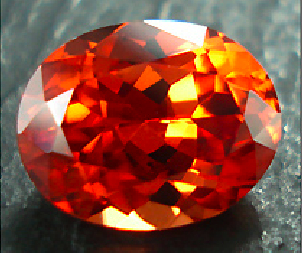
Carnelian, also called cornelian or sard, is the sixth gemstone. It is a chalcedony coloured by iron hydroxide. The name carnelian stems from the wonderful red color, a real incardanine. It is indeed a gemstone related to the process of incarnation. Max Stibbe, one of the first Waldorf teachers in Holland, considered the sequence of gemstones on the high-priest's breastplate as a reflection of the spiritual way of the old Jewish history. These twelve gemstones begin with carnelian, the gemstone of consanguinity, and is finally leading to jasper, the gemstone of unselfishness. That means: the blood had to be kept pure in such a way that it would provide unselfishly the body and the substance in which the incarnation of Christ could take place.
The twelve gemstones of the apocalypse represent the way of Christendom, beginning with the ego endowed unselfishness of jasper and completing its way in amethyst, the gemstone of the love of one's neighbor. Stibbe's problem was, what is the role of carnelian in the Apocalyptic sequence? Here we should look at the ultimate goal of incarnation: that is resurrection, the "Geistesmensch".
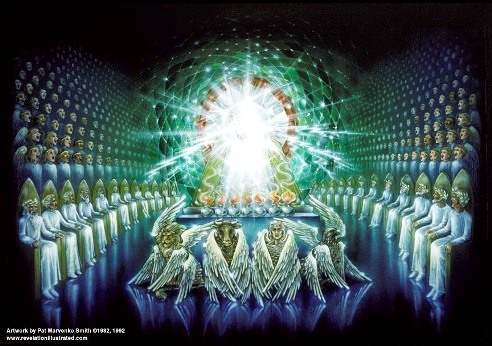
In the aspect of gemstone of resurrection carnelian is one of the two gemstones representing the highest divine being in the vision of Apocalypse chapter four.
- Dr. Simon van der Heide
Sunday, January 22, 2017
Book of Revelation Gemstones- Hyacinth
Hyacinth,
facing sardonyx in the ring of the twelve gemstones, is a marvellous
fiery red, totally transparent stone. In chemical terms it is zirconium
silicate. Zirconium is an element with an enormous light capacity. In
the previous century zirconium light was used in the same way as
magnesium light. At the same time, zirconium is an element with great
resistance (it is used in nuclear plants) and a good transparency: it is
the raw material for production of enamel.
Evidently hyacinth has a relation to light, but in a totally different way than chrysolite. The latter is more connected with sun-processes, the former has the light in itself, even to the extent to produce some radioactive radiation.
The capacity to produce light from inner sources may in a way be considered as an image of the capacity of imagination.
The relation between sardonyx as the gemstone of inspiration and hyacinth as the gemstone of imagination is of course clear, also in the sense that imagination (the transparent hyacinth) has a closer connection to our thinking, and inspiration (the practically untransparent sardonyx) is distinctly linked to the forces of the will. The way which leads to imagination and from imagination to inspiration is the way which makes our one-sided view of the world whole again. Between hyacinth and sardonyx there is the way of wholesomeness. The Bible uses the word “soteria”, translated by salvation.
- Dr. Simon van der Heide
Evidently hyacinth has a relation to light, but in a totally different way than chrysolite. The latter is more connected with sun-processes, the former has the light in itself, even to the extent to produce some radioactive radiation.
The capacity to produce light from inner sources may in a way be considered as an image of the capacity of imagination.
The relation between sardonyx as the gemstone of inspiration and hyacinth as the gemstone of imagination is of course clear, also in the sense that imagination (the transparent hyacinth) has a closer connection to our thinking, and inspiration (the practically untransparent sardonyx) is distinctly linked to the forces of the will. The way which leads to imagination and from imagination to inspiration is the way which makes our one-sided view of the world whole again. Between hyacinth and sardonyx there is the way of wholesomeness. The Bible uses the word “soteria”, translated by salvation.
- Dr. Simon van der Heide
Saturday, January 21, 2017
Book of Revelation Gemstones- Sardonyx
Sardonyx, the fifth gemstone, consists of very fine-banded layers of white chalcedony and red carnelian. Already from Roman times, both sardonyx and the quite similar agate-jasper were the famous material from which cameos were cut using the red layer as foundation and sculpturing the portrait in the white chalcedony layer, or vice versa.
In really typical sardonyx there is such an extremely fine-banded sequence that we are reminded of the phenomenon of sound vibration made visible in stone. In fact, our listening is a sequence of lively attention and silent concentration in our soul. It becomes clear why Rudolf Steiner indicated that sardonyx is related with the sense of hearing, and is at the same time the gemstone of inspiration.
- Dr. Simon van der Heide
![]() |
Centaur and Bacchante.
Giovanni Pichler (1734—1791).
Italy. Last quarter of the 18th century. Cameo. Sardonyx, gold. |
Friday, January 20, 2017
Book of Revelation Gemstones- Chrysoprase
Chrysoprase, opposite, but really very much opposite emerald, is a totally opaque gemstone, in fact a chalcedony beautifully green colored by finely disseminated nickel oxide. It has a green color in which blue is clearly present, the kind of green which arises from the dark and is underway to the light. Nickel is the metal which makes iron tough. Both the color and the peculiar character of nickel characterize man’s endeavor to go the way of inner development.
It is interesting to note that chrysoprase in a gemstone quality was, until recently only found in Saxony, in the middle of Europe (together with bright red jasper and amethyst it is found in the gemstone clad chapels which Charles IV of Bohemia had built in Prague and in his castle Karlstein in the middle of the fourteenth century). In the last decades however chrysoprase of high quality has been found and successfully mined in Queensland.
The relation between chrysoprase and emerald is obvious. The way to higher development is necessarily the way to the higher ego, that is to Christ. On this way arises the true faith, that means the faith in ourselves, in our higher ego, in Christ.
-Dr. Simon van der Heide
Thursday, January 19, 2017
Book of Revelation Gemstones- Emerald
Emerald, the fourth gemstone, is essentially beryl. Why does it take such an outstanding place among the gemstones if it is in fact only a beryl? Because of its color! Emerald green is a color in itself, and emerald will not change its color even by considerable heating. This color is due to the presence of extremely fine disseminated chromium. Chromium, the highest superlative of iron.
If we think of the high intelligence represented by beryl and the highest ego force represented by chromium, we easily see why emerald may be called the gemstone of the Christ.
In the already quoted passage (see jasper) of Apocalypse chapter four the throne is encircled by a rainbow of emerald. Seemingly a contradiction in itself because a rainbow contains all colors whereas the green of the emerald is one unique color. From a spiritual point of view this is not a contradiction: The highest ego which of course is unique, comprehends the total number of human egos in all their individual colors.
- Dr. Simon van der Heide
Subscribe to:
Comments (Atom)